Litsea Cubeba vs Lemon Myrtle: Choosing the Citral-Rich Oil
If you have spent any time formulating soap, candles, or a home fragrance blend, you have probably run into both of these oils and wondered why anyone needs two citrus-scented options that smell so similar on paper. Litsea cubeba and lemon myrtle are often mentioned in the same breath because they share the same star molecule: citral. But the plants come from opposite sides of the world, the extraction methods differ, and the price tags are not close. This guide walks through both oils honestly, including where each one falls short, so you can pick the right bottle for your project instead of guessing.
What Is Citral, and Why It Matters Here
Citral is a naturally occurring compound made up of two isomers, geranial and neral, and it is the reason both of these oils smell so distinctly "lemon" without a lemon in sight. It is also the compound formulators watch most closely, because citral is a known skin sensitizer at higher concentrations and it oxidizes over time when a bottle is exposed to heat, light, or air. Any citral-rich essential oil comparison has to start here, since the citral percentage is what drives both the scent intensity and the handling precautions for each oil.
Litsea cubeba typically tests between 65% and 85% citral, depending on the harvest and distillation. Lemon myrtle runs even higher, frequently in the 90% to 98% range, which makes it one of the most citral-concentrated essential oils sold commercially. That single number explains a lot of the differences you will read about below.
Litsea Cubeba at a Glance
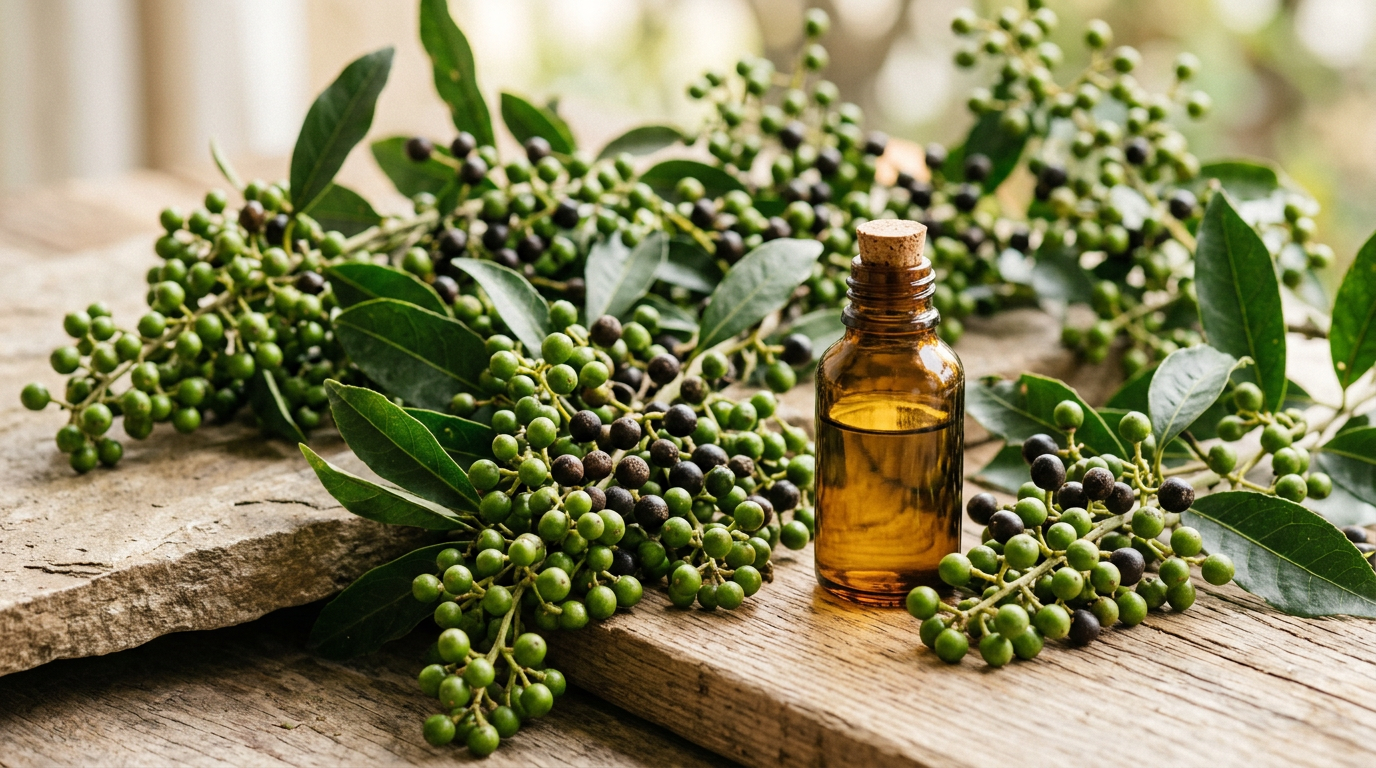
Litsea cubeba comes from the small, peppery fruit of the Litsea cubeba tree, native to China, Vietnam, and parts of Southeast Asia, where it has a long history in regional cooking and folk practice. In the fragrance and soap world, it goes by a second name almost as often as its botanical one: may chang. If you have seen "lemon myrtle vs may chang oil" as a search term, that comparison is actually litsea cubeba wearing its other hat, so anything said about litsea cubeba here applies to may chang oil as well.
The scent profile is bright and citrusy with a peppery, slightly green edge underneath, less sweet than lemon and a bit more complex than a straightforward citrus note. It is steam distilled from the small berries, and because the tree grows abundantly and the fruit is easy to harvest in volume, the oil tends to be one of the more affordable citrus-scented options on the shelf.
Lemon Myrtle at a Glance
Lemon myrtle (Backhousia citriodora) is native to the subtropical rainforests of coastal Queensland and New South Wales in Australia. Unlike litsea cubeba, the oil is steam distilled from the leaves rather than the fruit, and Australian lemon myrtle plantations are far more limited in scale than the litsea cubeba growing regions in Asia. That supply difference alone accounts for a meaningful part of the price gap between the two oils.
The scent is often described by perfumers and soap makers as the most "true lemon" of any essential oil, sharper and cleaner than lemon peel oil itself, with almost no bitterness or peppery undertone. It is a favorite in fine fragrance work and high-end skincare formulation specifically because of that purity, but the intensity means it needs to be measured carefully rather than eyeballed.
Litsea Cubeba vs Lemon Myrtle: Comparison Table
| Attribute | Litsea Cubeba (May Chang) | Lemon Myrtle |
|---|---|---|
| Plant part used | Fruit (berries) | Leaves |
| Native region | China, Vietnam, Southeast Asia | Coastal Queensland & New South Wales, Australia |
| Approximate citral content | 65% to 85% | 90% to 98% |
| Scent character | Bright citrus with a peppery, green edge | Sharp, clean, considered the closest to "true lemon" |
| Typical retail price | Budget to mid-range | Premium |
| Common uses | Soap, candles, cleaning blends, room sprays | Fine fragrance, skincare, culinary flavoring in Australia |
| Skin sensitivity concern | Moderate, dilute before topical use | Higher, dilute more conservatively given the citral load |
| Shelf stability | Oxidizes over 12 to 18 months; store cool and dark | Oxidizes over 12 to 18 months; store cool and dark |
| Availability | Widely available, larger supply base | More limited, fewer producers |
Litsea Cubeba: Pros and Cons
Pros
- More affordable per ounce than lemon myrtle, which matters when a soap or candle recipe calls for a generous fragrance load.
- Peppery undertone gives blends more depth than a flat, one-note citrus.
- Wide availability from multiple growing regions means less risk of a single-harvest supply crunch.
- Pairs well with woodsy and herbal notes like cedarwood, patchouli, and rosemary in layered blends.
Cons
- Scent fades faster in cold-process soap than in melt-and-pour or candles, since saponification is hard on delicate top notes.
- The peppery facet is not for every project; some formulators want a cleaner, single-note citrus instead.
- Still needs conservative dilution given the citral content, and a patch test is worth doing before any leave-on skin application.
Lemon Myrtle: Pros and Cons
Pros
- The cleanest, most recognizable lemon scent of any essential oil on the market, prized in fine fragrance and premium skincare lines.
- A little goes further in a finished formula because the aroma is so concentrated.
- Strong reputation and consumer recognition, which can be a selling point on a product label.
Cons
- Premium pricing makes it a harder sell for large-batch soap or candle production where margins are tight.
- Higher citral concentration means dilution guidelines deserve extra attention, especially for facial or leave-on products.
- Supply is more limited, so availability and pricing can shift more with a single season's harvest than a widely grown crop like litsea cubeba.
Lemon Myrtle vs May Chang Oil: Clearing Up the Confusion
Worth repeating plainly: may chang oil and litsea cubeba oil are the same essential oil under two different common names. When people search "lemon myrtle vs may chang oil," they are really asking the same question as "litsea cubeba vs lemon myrtle," just with the fruit's alternate name in place of the botanical one. The only reason this causes confusion is that most litsea cubeba suppliers list one name on the label and use the other in marketing copy, so a shopper can end up comparing two bottles from the same plant thinking they are different oils entirely. If a listing says "may chang," you are looking at litsea cubeba, full stop.
Best For: Use-Case Recommendations
Choose Litsea Cubeba (May Chang) If You Are:
- Formulating cold-process or hot-process soap on a budget and want a bright citrus top note without the premium price.
- Making candles or wax melts where a peppery, layered citrus profile adds interest.
- Building a room spray or cleaning blend where cost per batch matters more than absolute scent purity.
- Layering a citrus note into a more complex fragrance alongside woods, herbs, or florals.
Choose Lemon Myrtle If You Are:
- Formulating a premium skincare line or fine fragrance where scent purity is the selling point.
- Working on a smaller batch size where the higher cost per ounce is easier to absorb.
- Marketing to a customer base that specifically recognizes and seeks out lemon myrtle by name.
- Making a product where a single, unmistakable lemon note needs to carry the whole scent story.
Best Citrus Oil for Soap Making: The Practical Answer
For most soap makers asking which is the best citrus oil for soap making, litsea cubeba tends to win on practicality. Cold-process soap is an unforgiving environment for top notes: the high pH of raw soap batter and the heat of saponification burn off a portion of any citrus oil's aroma before the bars ever finish curing. Because litsea cubeba costs less per ounce, you can afford to use a heavier fragrance load to compensate for that loss, which is much harder to justify with a premium oil like lemon myrtle.
That said, lemon myrtle has a place in soap too, particularly in melt-and-pour bases or syndet bars where there is no lye reaction to fight against and the scent survives closer to full strength. If the finished bar is a higher-end product where the label itself calls out lemon myrtle by name, the cost can be worth it. For everyday cold-process batches, though, litsea cubeba is the more forgiving and more affordable choice, and it is why so many small-batch soap makers keep it as a pantry staple.
Blending Notes for Both Oils
Litsea cubeba's peppery edge makes it a natural partner for cedarwood, patchouli, ylang ylang, and rosemary, and it holds up well in blends meant to feel a little more grounded than a straight citrus scent. Lemon myrtle, being closer to a single, clean note, pairs beautifully with lighter florals like neroli or jasmine, or with green notes like petitgrain, where you want the lemon to stay front and center rather than share the stage.
Both oils benefit from a fixative in the base notes since citral-heavy top notes fade quickly on their own. Consider adding a small amount of a heavier oil, such as vetiver or sandalwood, if longevity in the finished product matters to your formulation.
Safety and Dilution Notes
Both oils carry a meaningful citral load, so a patch test before any topical use is a good habit, and neither should be applied to skin undiluted. General cosmetic dilution guidance for citral-rich oils runs around 0.5% to 1% in leave-on products and slightly higher in rinse-off applications like soap, though exact ratios depend on the finished product type and who will be using it. Store both oils in a cool, dark spot in a tightly capped, ideally dark glass bottle, since citral oxidizes with exposure to air, heat, and light, and an oxidized oil is more likely to cause skin irritation than a fresh one. As with any essential oil, consult a qualified healthcare provider before use if you are pregnant, nursing, or have a known sensitivity, and keep both oils away from children and pets.
The Verdict
There is no single winner here, only a better fit depending on the project and the budget. For volume production, cold-process soap, candles, and everyday blending, litsea cubeba (or may chang, same oil) delivers a bright, layered citrus note at a price that makes generous use practical. For fine fragrance, premium skincare, or any product where the label itself trades on scent purity, lemon myrtle's cleaner, more concentrated lemon profile justifies its higher cost.
If you are just starting out and want one bottle that covers most citrus needs without straining the budget, start with litsea cubeba. Once you have a specific premium formulation that calls for the purest lemon note available, that is the moment to bring lemon myrtle into the lineup alongside it.
Both oils are sold for cosmetic and aromatic use only. This article is educational and does not replace advice from a qualified healthcare provider.