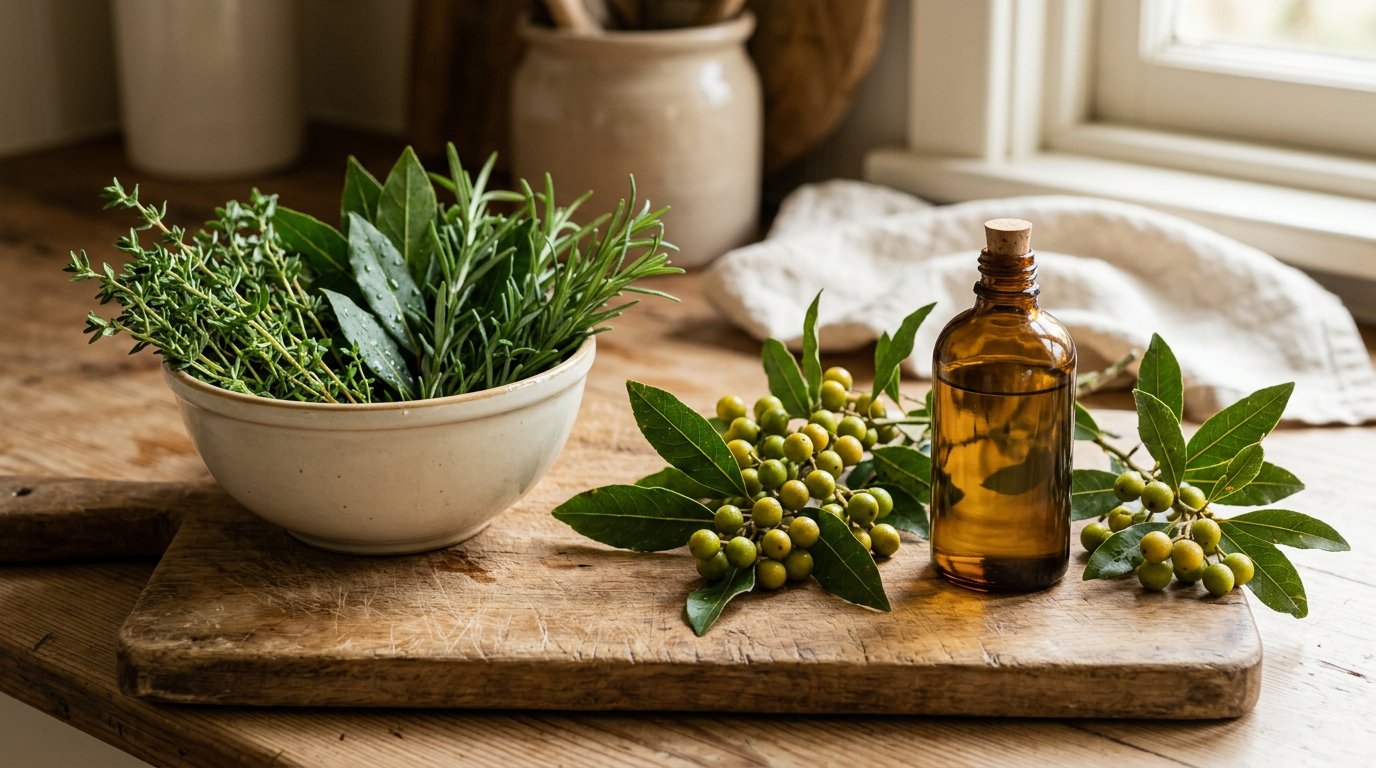
DIY Litsea Cubeba Solid Perfume Balm: A Beeswax and Jojoba Recipe
A solid perfume balm is one of the easiest ways to carry a favorite scent with you without reaching for a spray bottle. This litsea cubeba solid perfume balm leans on the oil's bright, lemony character, something between fresh lemongrass and verbena, and sets it into a small tin of beeswax and jojoba oil that melts gently against warm skin. It is a good first project if you have never made a diy solid perfume recipe before: no double boiler drama, no fussy emulsions, just a few ingredients and about twenty minutes.
Below you will find the full ingredient list, step-by-step instructions, a section on dilution and patch testing that you should not skip, storage guidance, and a handful of variations if you want to build your own natural solid cologne recipe once you have the base technique down.
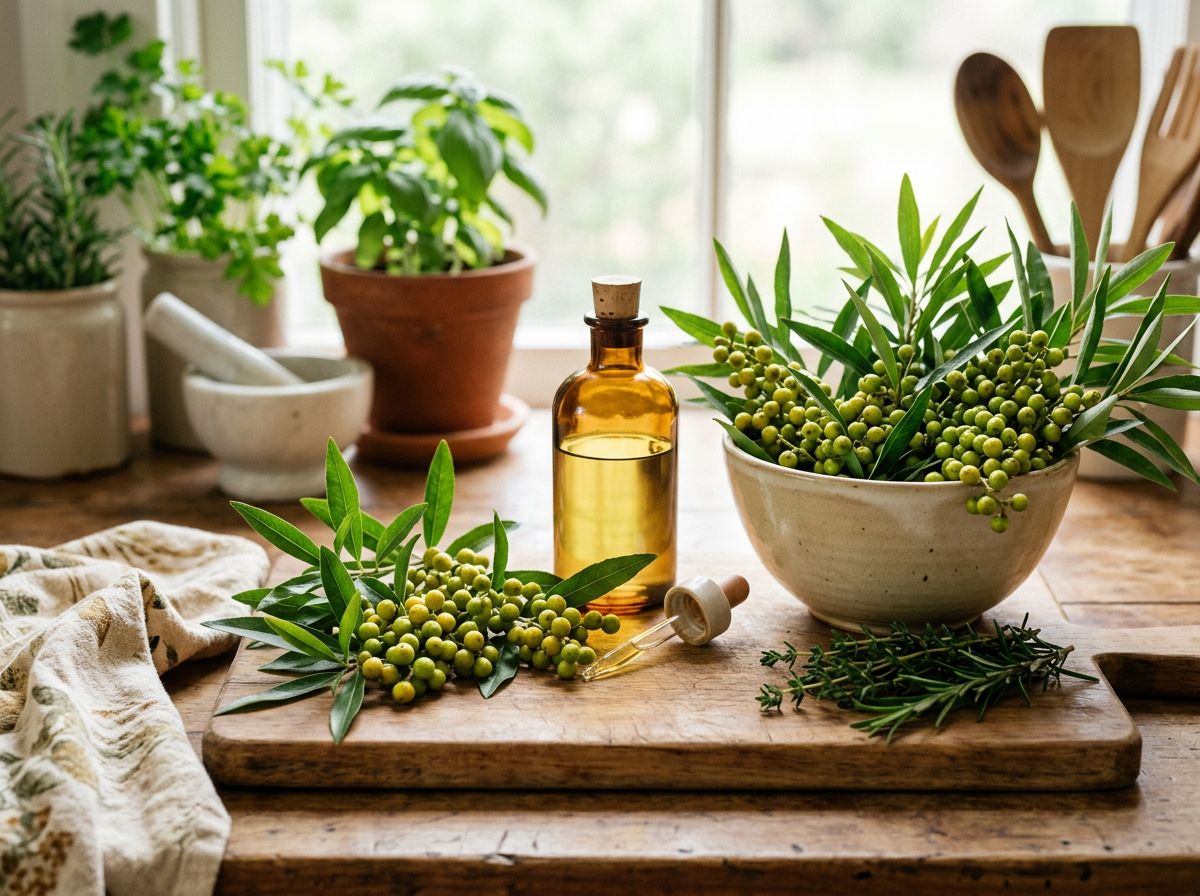
Difficulty and Prep Time
- Difficulty: Beginner
- Active prep time: 15 to 20 minutes
- Set time: 30 to 60 minutes at room temperature, or 15 minutes in the refrigerator
- Yield: About 2 ounces of balm, enough to fill four 0.5-ounce tins or two 1-ounce tins
Why Beeswax and Jojoba Work So Well Together
Beeswax gives the balm its structure. It is solid at room temperature but softens quickly at skin temperature, which is exactly the behavior you want from something you will dab onto pulse points. Jojoba oil is technically a liquid wax rather than a true oil, which means it has excellent shelf stability and a light, non-greasy finish that does not turn sticky the way some heavier carrier oils can. Together, a beeswax jojoba perfume balm holds its shape in a tin, glides on smoothly, and leaves skin feeling soft rather than coated.
Ingredients
This recipe makes about 2 ounces (roughly four 0.5-ounce tins). Scale up or down as needed, keeping the ratios the same.
- 1 tablespoon (about 9 grams) beeswax pellets, or grated beeswax bar
- 3 tablespoons (about 40 grams) jojoba oil
- 1 teaspoon (about 5 grams) shea butter, optional, for a creamier glide
- 25 to 30 drops litsea cubeba essential oil (about 1.2 to 1.5 mL) for a standard-strength balm
- Optional: 10 to 15 drops of a complementary oil such as cedarwood, patchouli, or geranium, if you want to round out the top note with something warmer
If this is your first time formulating a diy solid perfume recipe, start on the lower end of the drop count. You can always add a few more drops before the balm sets; you cannot easily take them back out.
Tools
- A small heatproof glass measuring cup or jar
- A saucepan for a makeshift double boiler, or a microwave if you prefer to melt in short bursts
- A small kitchen scale (helpful but not required)
- A stirring stick or small spoon
- Two to four small tins or shallow jars with lids (0.5 to 1 ounce size)
- A dropper or measuring spoon for the essential oil
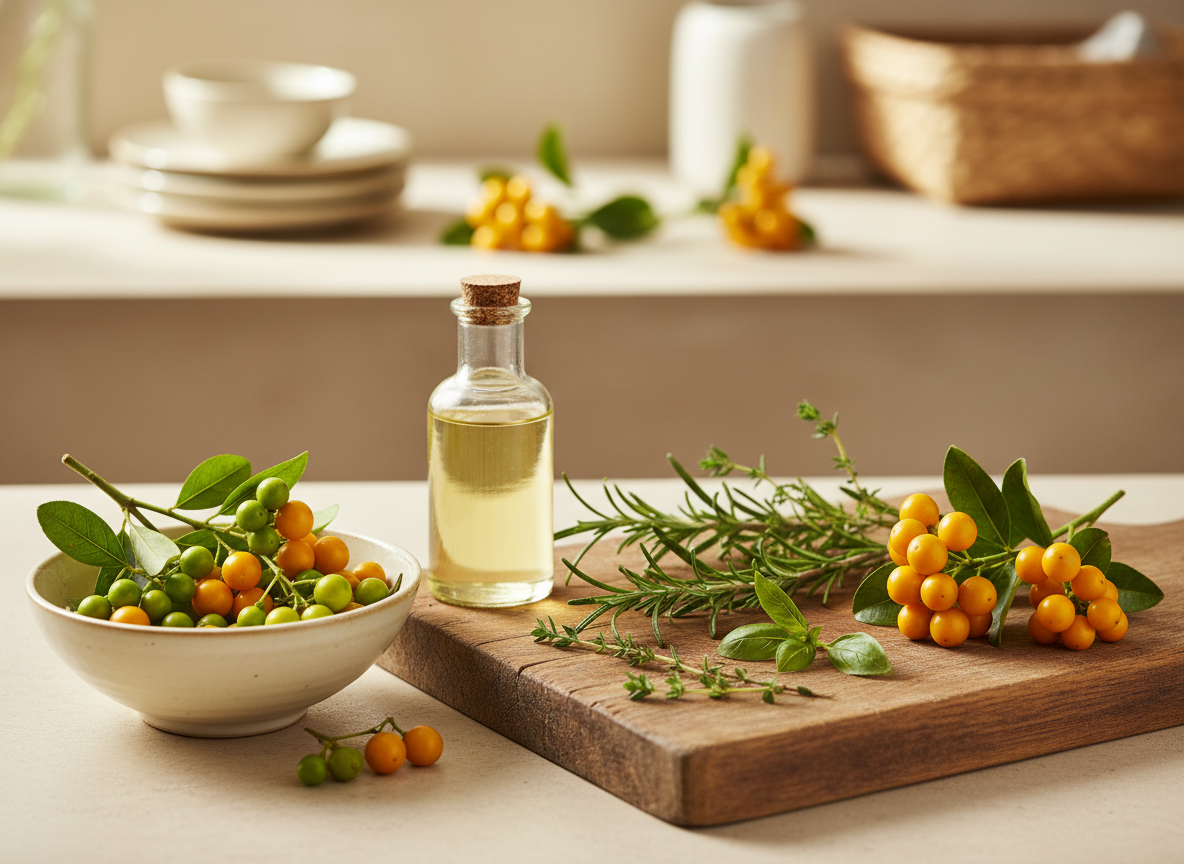
Step-by-Step Instructions
Step 1: Melt the Beeswax
Combine the beeswax pellets and jojoba oil in your heatproof glass jar. Set the jar in a small saucepan with an inch or two of simmering water, stirring occasionally, until the beeswax is fully melted. If you would rather skip the stovetop, microwave the mixture in 15-second bursts, stirring between each one, until it is liquid. Watch it closely: beeswax can scorch if it overheats.
Step 2: Add the Shea Butter
If you are using shea butter, stir it into the melted wax and oil now. It should melt in within a few seconds of contact with the warm liquid. Stir until the mixture looks uniform and glossy.
Step 3: Cool Slightly Before Adding Essential Oil
Remove the jar from heat and let it sit for one to two minutes. This matters more than it sounds: pouring essential oil into liquid that is still very hot can cause some of the lighter aromatic compounds in litsea cubeba, particularly the citral that gives it that lemony brightness, to evaporate off before the balm even sets. A slightly cooler pour preserves more of the scent.
Step 4: Add the Litsea Cubeba Essential Oil
Add your 25 to 30 drops of litsea cubeba essential oil (and any complementary oil, if using) and stir gently but thoroughly for about 30 seconds. You want the oil distributed evenly through the base, not just floating on top.
Step 5: Pour Into Tins
Working quickly, since the mixture will start to thicken as it cools, pour it into your prepared tins. Fill them close to the rim but leave a little headspace so the lid can close cleanly once the balm has set.
Step 6: Let It Set
Leave the tins undisturbed at room temperature for 30 to 60 minutes, or move them to the refrigerator for about 15 minutes if you are impatient. The balm is ready once it looks matte and solid rather than glossy and wet. Cap the tins once fully set.
How to Use It
Warm a fingertip against the balm's surface for a second or two, then dab lightly onto pulse points such as wrists, the inside of the elbow, or behind the ears. A little goes a long way. Because this is a leave-on skin product rather than a rinse-off one, less is genuinely more here, both for how the scent wears throughout the day and for keeping the application well within a sensible dilution range.
Safety First: Dilution, Patch Testing, and Who Should Be Cautious
Please read this section before you make your first batch, and again before you make any variation of it.
Dilution
The recipe above uses roughly 25 to 30 drops of essential oil in about 2 ounces of base, which works out to approximately a 3 to 5 percent dilution by volume. That is on the higher end of what is generally considered appropriate for a leave-on skin product, but it sits within the range commonly used for solid perfumes specifically because they are applied in small dabs to a few small areas rather than spread across large sections of skin. If you have sensitive skin, are new to working with essential oils, or simply want to be conservative, cut the essential oil down to 12 to 15 drops for a gentler 2 percent dilution and see how your skin responds before going any stronger.
Patch Test Every Time
Before applying a new batch anywhere near your wrists or neck, do a patch test. Dab a small amount of the finished balm on the inside of your forearm, cover loosely if you like, and wait 24 to 48 hours. Watch for redness, itching, or irritation at the site. If your skin reacts, do not use that batch elsewhere on your body, and consider a lower dilution or a different oil combination for your next attempt.
Who Should Be Cautious
- If you are pregnant, nursing, or managing an ongoing health condition, check with a qualified healthcare provider before adding a new essential oil to your routine.
- Keep essential oils and finished balms out of reach of children and pets. Undiluted essential oil is not intended for use on infants or young children.
- Avoid applying the balm to broken, irritated, or freshly shaved skin.
- Keep the balm away from eyes and mucous membranes.
- This balm is formulated for external, aromatic use only. It is not intended for internal use.
- Citrus-family essential oils can vary in how they interact with sun exposure. If you want to understand where litsea cubeba specifically falls on that spectrum before wearing this balm outdoors, our deeper look at litsea cubeba and sun sensitivity is worth reading first.
None of the guidance above is a substitute for individualized advice. If you have known skin sensitivities or are unsure whether an ingredient is right for you, a qualified healthcare provider or dermatologist is the right person to ask.
Storage and Shelf Life
Store your finished tins in a cool, dry place away from direct sunlight. A bathroom cabinet or bedroom drawer works better than a sunny windowsill, since both heat and light will shorten the balm's usable life and dull the scent faster.
Made as directed, this balm should hold its scent and texture for around 9 to 12 months. Jojoba oil is naturally slow to go rancid, which helps, but litsea cubeba oil itself is one of the less stable essential oils on the shelf: its citral content is prone to oxidizing over time, especially with heat and air exposure, which is part of why proper storage of the essential oil itself matters even before you get to the finished balm. Keep your original bottle of litsea cubeba oil capped tightly, stored cool and dark, and use oil that still smells bright and fresh rather than flat or sour when you formulate.
Signs it is time to toss a batch: the scent has faded significantly, smells noticeably different than when you made it, or the texture has separated or turned grainy.
Variations and Substitutions
Vegan Version
Swap the beeswax for candelilla wax at about half the amount (candelilla is firmer, so you need less), or use soy wax formulated for balms. Test the set time and hardness, since plant waxes can behave differently than beeswax.
Different Carrier Oils
Jojoba is our first choice for its stability and light finish, but fractionated coconut oil or sweet almond oil will also work in this ratio if that is what you have on hand. Fractionated coconut oil is virtually scentless and very shelf-stable; sweet almond oil has a slightly nuttier undertone and a shorter shelf life.
Scent Layering
Litsea cubeba pairs well with woodsy and floral notes if you want to build a more layered natural solid cologne recipe. A few combinations to try, always keeping your total drop count within the dilution range above:
- Litsea cubeba + cedarwood, for a citrus-and-wood combination
- Litsea cubeba + geranium, for something a touch more floral
- Litsea cubeba + patchouli, for an earthier, longer-wearing base
If you are still getting acquainted with what litsea cubeba brings to a blend on its own, our general guide to the oil covers its scent profile and origins in more depth, and our roundup of other craft uses for litsea cubeba is a good source of further blending ideas.
Firmer or Softer Balm
If your finished balm feels too soft for your climate, increase the beeswax by an extra half tablespoon next time. If it feels too hard to warm up with a fingertip, reduce the beeswax slightly and increase the jojoba oil to compensate.
Troubleshooting
| Problem | Likely Cause | Fix |
|---|---|---|
| Balm is too soft or oily | Not enough beeswax relative to oil | Remelt and add a bit more beeswax, then re-pour |
| Balm is too hard to dab easily | Too much beeswax | Remelt and add a touch more jojoba oil |
| Scent fades within a few weeks | Essential oil evaporated during a too-hot pour, or oil was already old | Let the base cool further before adding oil next time; use fresher essential oil |
| Surface looks grainy or streaky | Ingredients cooled unevenly before pouring | Stir thoroughly and pour promptly once oils are added |
A Note on Sourcing
The quality of your finished balm depends heavily on the quality of the litsea cubeba oil you start with. Look for oil that is steam-distilled from the fruit, comes with a batch-specific GC-MS report from the supplier, and smells sharply citrusy and fresh rather than dull or waxy. A small amount of good oil goes further, in both scent and shelf life, than a larger amount of something that has already started to degrade on a warehouse shelf.
Once you have a base technique down, this beeswax jojoba perfume balm is easy to riff on for gifts, travel tins, or seasonal scent swaps. Keep good notes on your ratios as you experiment, since a small change in drop count or wax ratio can shift both the texture and how long the scent lasts on skin.