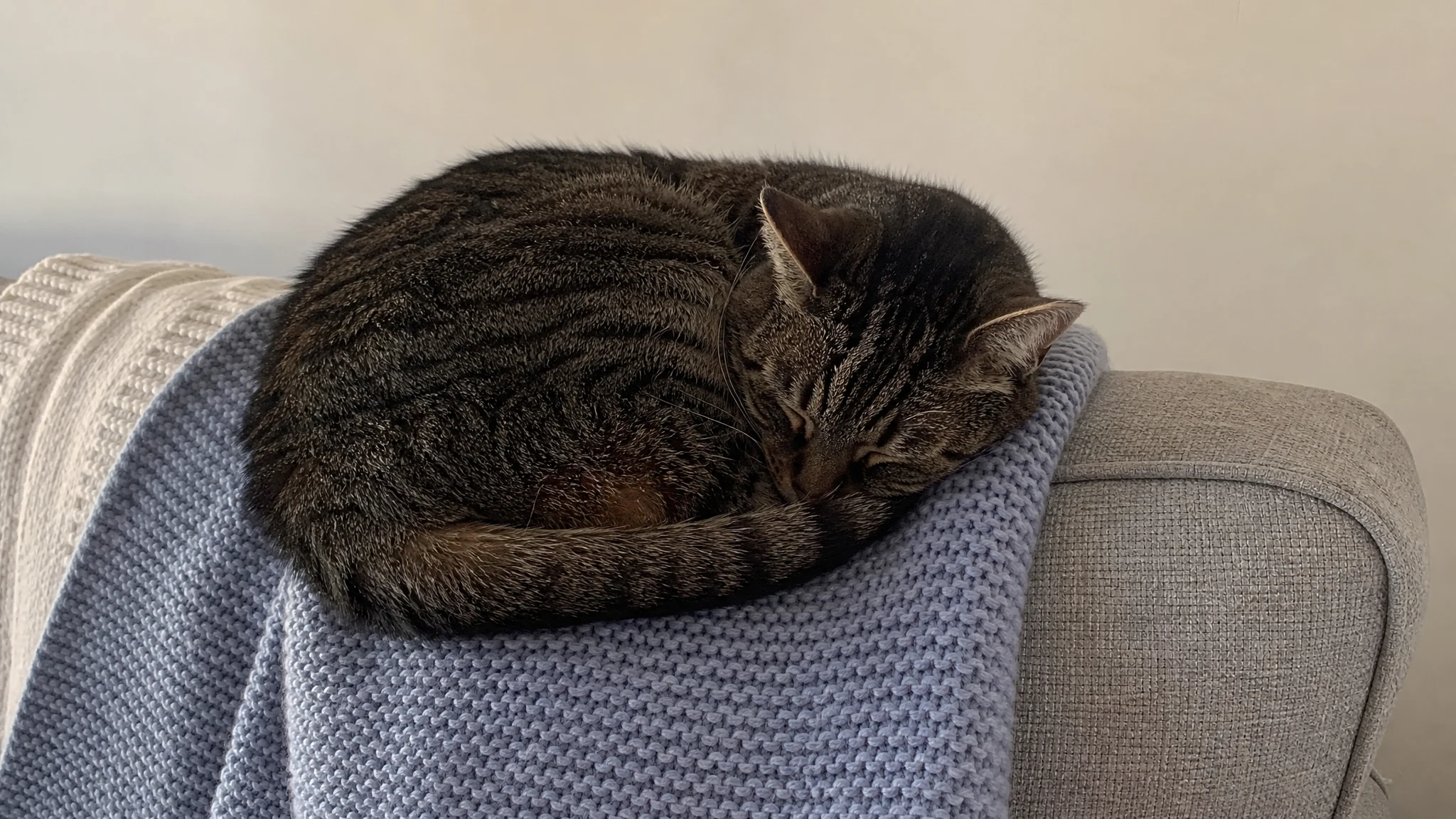
Litsea Cubeba Oil and Pets: What Vets Advise
A bright lemon scent in the living room is lovely, until a cat strolls through it. If you share your home with animals, the sensible first step is to see what the veterinary world actually says. We sell a cosmetic oil for people, so we are not the voice to give pet advice, but we can point to the sources that are.

Litsea Cubeba Essential Oil
Our own Litsea Cubeba Essential Oil, in sizes from 0.5 oz to bulk.
From $12.99
Shop Now →What the veterinary sources say
Neither of the two main veterinary references we read names litsea cubeba, so what follows applies to essential oils generally. The The Essentials of Essential Oils Around Pets | ASPCA guide says that concentrated oils can be dangerous for pets, whether through spills, walking through oil or ingestion, and that using a diffuser for a short time in a secured area your pet cannot enter is not likely to be an issue. It adds that pets with a history of breathing problems may be better off avoiding diffusers, and that if you have birds it is best to avoid one in the house altogether.
The Toxicoses From Essential Oils in Animals - Toxicology - MSD Veterinary Manual is a little stricter. It advises keeping pets out of a room while a diffuser runs, ventilating afterwards, running diffusers only briefly, and never applying concentrated oils directly to a pet. It explains that active diffusers (ultrasonic and nebulizing types) release microdroplets that can settle on fur or feathers and then be absorbed or swallowed during grooming, and that cats and birds are at particular risk. When two careful sources differ, the stricter instruction costs you only a closed door, which is why we would follow it.
Why cats get extra attention
You will often read that cats lack an enzyme, and the manual does say so. The research behind it is a 2011 study showing that the gene for a major detoxifying enzyme, UGT1A6, is switched off in all cats, which affects how they clear certain drugs and phenol-type compounds (Evolution of a major drug metabolizing enzyme defect in the domestic cat and other felidae: phylogenetic timing and the role of hypercarnivory). Citral is not a phenol, so that paper does not prove cats cannot handle it. What it does tell us is that cats have one fewer clean-up route than many animals, and that is a sound reason for extra caution around any concentrated oil.
European regulators took the same view. EFSA assessed litsea berry oil as a feed additive, meaning a tiny amount mixed continuously into food, not a spill or a diffuser. Its panel set maximum safe feed levels of 50 mg per kilogram of complete feed for dogs and 8.5 mg per kilogram for cats, and it applied a much larger safety margin for cats on account of their reduced ability to glucuronidate (Safety and efficacy of a feed additive consisting of an essential oil from the fruits of Litsea cubeba (Lour.) Pers. (litsea berry oil) for use in all animal species (FEFANA asbl)). The same opinion treats the oil as an irritant to skin and eyes and as a skin and respiratory sensitiser.
Scale: a drop is a lot
Here is a little arithmetic to put those feed limits in context. The batch on our Certificate of Analysis has a relative density of 0.883, so with about 20 drops per millilitre one drop is roughly 44 mg. Using the opinion's assumed cat (3 kg, 60 g dry feed a day), the limit works out to about half a milligram of oil a day, so a single drop is around 86 times that. These are continuous, safety-margin feed levels, not toxic doses, but they show how small the amounts regulators consider acceptable are compared with what a dropper delivers.
Practical points from the sources
- Keep the bottle capped and stored high, where paws and noses cannot reach it. Our own guidance is to keep it away from children and pets.
- If you diffuse any oil, follow the stricter veterinary instruction: pets out of the room, ventilation afterwards, and no birds in the house.
- Do not apply the oil to a pet. We found no source giving a pet dilution for litsea cubeba, and our skin guidance is for people.
- If your animal has breathing trouble or a health condition, ask your veterinarian before diffusing anything.
If an animal has been exposed, call your veterinarian or the ASPCA Animal Poison Control Center at (888) 426-4435 straight away, and have the bottle, the time and the amount to hand. For more on how the same oil behaves in the home, our articles on pregnancy and children and skin basics cover the people side.
Litsea Cubeba Essential Oil
Litsea Cubeba Essential Oil from our own shop, in sizes from 0.5 oz to bulk.
From $12.99
Shop Now →Sources & Further Reading
- The Essentials of Essential Oils Around Pets | ASPCA
- Toxicoses From Essential Oils in Animals - Toxicology - MSD Veterinary Manual
- Evolution of a major drug metabolizing enzyme defect in the domestic cat and other felidae: phylogenetic timing and the role of hypercarnivory
- Safety and efficacy of a feed additive consisting of an essential oil from the fruits of Litsea cubeba (Lour.) Pers. (litsea berry oil) for use in all animal species (FEFANA asbl)