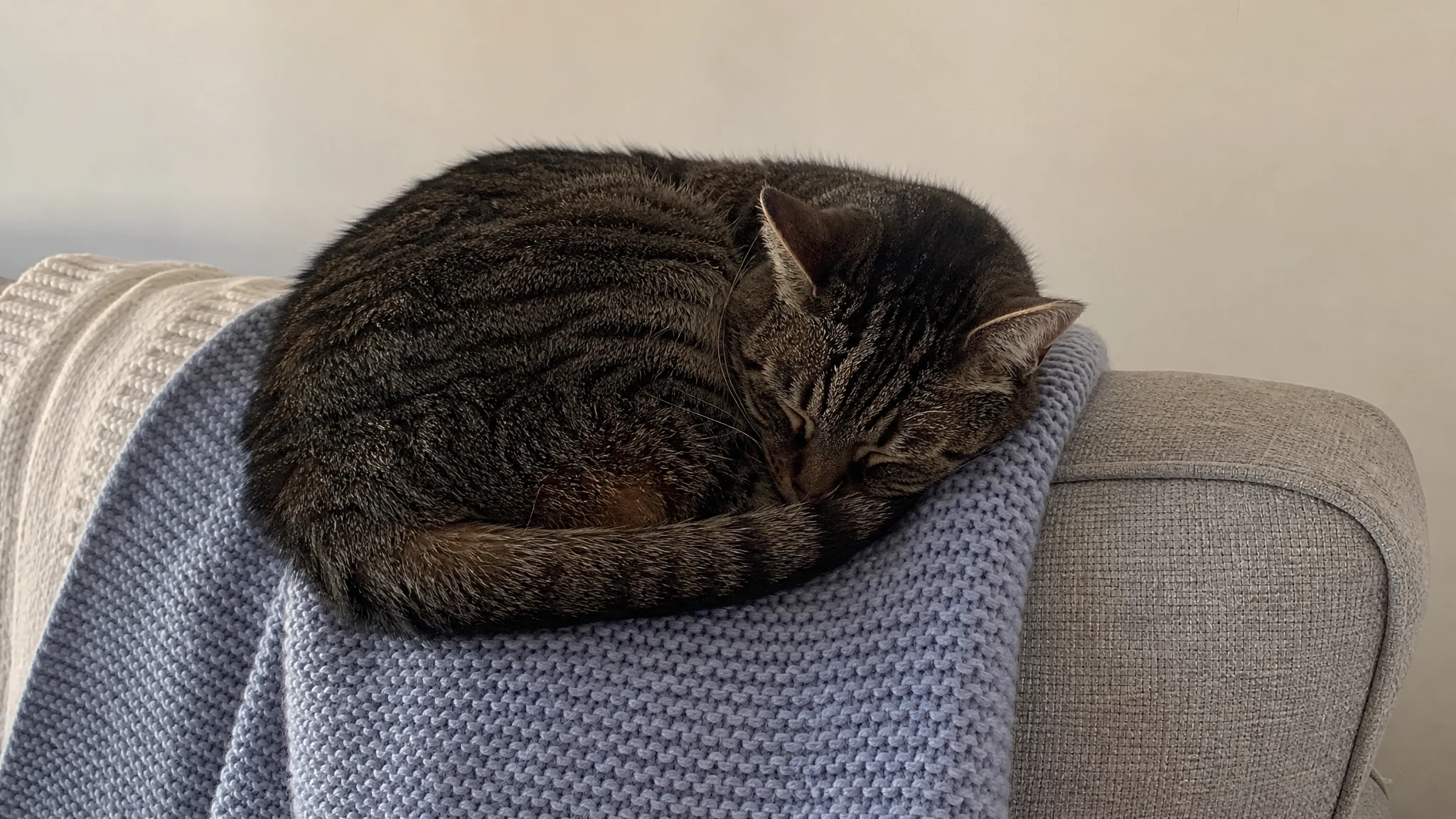
Litsea Cubeba Oil Around Cats and Dogs: What the Sources Say
No source read for this article publishes a safe level of litsea cubeba oil for a cat or a dog, so there is no number to give you, and our own label copy says to keep the oil away from pets. What follows is a decision order: which route the animal meets the oil by (a diffuser, a spill, a coat, a licked wrist), what veterinary sources say about that route, what the one regulatory document on this oil and animals does and does not show, and who to call.
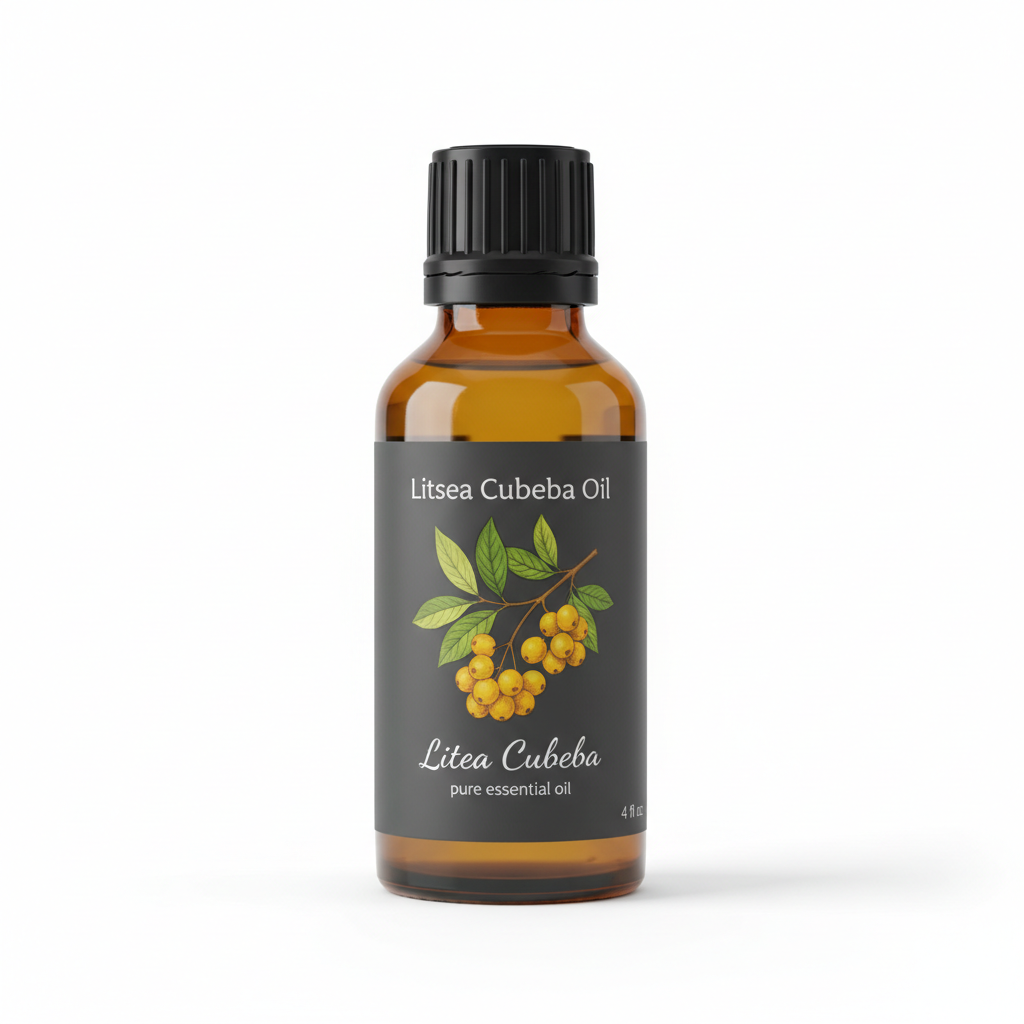
Litsea Cubeba Essential Oil
Our own Litsea Cubeba Essential Oil, in sizes from 0.5 oz to bulk.
From $12.99
Shop Now →Start with the route, because each has different sources
| Route | What the sources say | Source |
|---|---|---|
| Diffuser running in a room | Passive diffusers (reeds, candles) emit no droplets, so the main hazard is respiratory irritation unless one is tipped over. Active ones (ultrasonic, nebulizing) emit microdroplets that can collect on hair or feathers. Run them under 30 minutes, keep pets out of the room, ventilate afterward. | Merck/MSD Veterinary Manual, March 2025 |
| Spill, chewed bottle, oil on the coat | Concentrated (100%) oils "can absolutely be a danger for pets"; walking through oil, coat contact and ingestion can all cause problems. Listed signs: unsteadiness, depression, vomiting, diarrhea, low body temperature in severe cases. | ASPCA, June 2022 |
| Pet licks skin you treated | No source found for this exact case. Reasoning: Merck says a cat's grooming adds dermal and oral exposure, so treat any oil on you or on fabric as reachable by the animal. | Reasoning from Merck |
Do the sources agree about diffusers? Not quite
The ASPCA (2022) says using a diffuser "for a short time period in a secured area" is "not likely to be an issue," while noting that pets with breathing problems may be better off avoiding them, and that with birds it is best to avoid a diffuser altogether. The Merck/MSD Veterinary Manual (March 2025) goes further: keep pets out of a room while a diffuser runs, ventilate afterward, and note that birds are at high risk. Neither page names litsea cubeba. Where the two differ, the stricter instruction costs you a closed door, so that is what we would follow.
Cats: what the enzyme point says, and what it does not
Merck states that cats "are more sensitive because they are deficient in the enzyme glucuronyl transferase," and Pet Poison Helpline (undated, Kia Benson, DVM) says the same in plainer words. The underlying paper is Shrestha et al., 2011, PLoS One: the gene for UGT1A6, the main phenol-clearing enzyme, is a pseudogene in all living Felidae, with the loss fixed between 35 and 11 million years ago, and the authors say it makes cats highly sensitive to drugs such as acetaminophen and aspirin and may slow clearance of structurally related phenolic compounds from the environment. Citral is not a phenol. The paper therefore does not show that cats cannot clear citral; it shows a general reduction in one detoxification route. We state that as a limit on the argument, not a reassurance: the regulator below applied extra caution for cats on exactly this ground.
Pet Poison Helpline lists citrus oil (limonene) among oils known to poison cats, and not on its dog list. Litsea cubeba is not a citrus, but the composition literature gives it limonene: 0.7% to 5.3% in eight Chinese fruit oils (Si et al., 2012, Molecules), about 13% on average across six batches in the EFSA file, and 20.44% in a commercial Thai sample (Sattayakhom et al., 2021). The COA we publish has no composition, so none of these figures describe our oil. The inference is only that a cat owner has no basis to file litsea oil outside the citrus warning.
The one regulatory document, and its arithmetic
The European Food Safety Authority assessed litsea berry oil as a feed additive for all animal species (EFSA FEEDAP Panel, 2021, EFSA Journal 19(6):e06623). It is a document about oil mixed into food at low, continuous levels, not about diffusing or spills. The Panel set maximum safe feed concentrations of 50 mg/kg complete feed for dogs and 8.5 mg/kg for cats. For cats it raised the required margin of exposure from 100 to 500 "because of the reduced capacity of glucuronidation." No toxicity study of the additive itself had been submitted; the Panel worked from constituent data, and its oil averaged about 66% geranial plus neral.
The same opinion says the oil should be considered an irritant to skin and eyes, a skin sensitiser and a presumed respiratory sensitiser, and that the applicant gave no user-specific data.
Here is what those feed limits look like against a drop. Our COA gives a relative density of 0.883, so with about 20 drops to the ml one drop is about 44 mg. The opinion's cat assumptions (3 kg body weight, 60 g dry feed a day) turn 8.5 mg/kg into about 0.51 mg of oil a day; one drop is roughly 86 times that. For a dog (15 kg, 250 g feed a day) 50 mg/kg is about 12.5 mg a day; one drop is about 3.5 times that. These are continuous, margin-loaded feed levels, not toxic doses, and a different oil composition would change them. The point is only the scale: the amounts a regulator treated as acceptable in daily food are far below what a dropper delivers.
A household check if you diffuse anyway
This is reasoning from the sources above, not something we have tested.
- Choose a room with a door that closes, and keep the animal on the other side, with water and a way out. Merck's instruction is to keep pets out while it runs.
- Run it under 30 minutes, then ventilate (Merck).
- No birds in the house at all if you can help it (ASPCA, Merck).
- If the animal has a breathing problem, skip diffusing and ask your veterinarian first (ASPCA).
- Never put the oil on a pet, at any dilution. The ASPCA advises avoiding direct application, and no source read gives a pet dilution for this oil.
- Store the bottle capped, high and closed. Our own copy says to keep it away from pets and children, and to keep it cool and dark.
If it has already happened
Call a veterinarian or a poison line now rather than watching. The ASPCA names its Animal Poison Control Center at (888) 426-4435; Pet Poison Helpline lists (855) 764-7661, 24 hours. Merck says not to induce vomiting in essential oil toxicosis because of the risk of aspiration. Have the bottle, the time, the amount you think was involved and the batch number on the COA (LICQGCLCCNC003A) ready. Be aware that the COA shows only appearance, smell, density, refractive index and optical rotation, so it will not tell a clinician the oil's composition.
For a pet question, the right answer comes from your veterinarian, and for anything beyond the routes above our FAQ, the skin basics and the storage notes cover the human side. Diffuser recipes are in the diffuser blends post; read this article before running any of them in a home with animals.
Litsea Cubeba Essential Oil
Litsea Cubeba Essential Oil from our own shop, in sizes from 0.5 oz to bulk.
From $12.99
Shop Now →Sources & Further Reading
- ASPCA, 2022 (June 23). The Essentials of Essential Oils Around Pets. aspca.org/node/66967
- Merck/MSD Veterinary Manual, 2025 (March). Toxicoses from Essential Oils in Animals. msdvetmanual.com
- Benson K, Pet Poison Helpline, undated. Updates on Essential Oils. petpoisonhelpline.com
- Shrestha B et al., 2011. Evolution of a major drug metabolizing enzyme defect in the domestic cat and other Felidae. PLoS One 6(3):e18046. PMC3065456
- EFSA FEEDAP Panel, 2021. Safety and efficacy of a feed additive consisting of an essential oil from the fruits of Litsea cubeba (litsea berry oil) for all animal species. EFSA Journal 19(6):e06623. PMC8193530
- Si L et al., 2012. Chemical composition of essential oils of Litsea cubeba harvested from its distribution areas in China. Molecules 17:7057. PMC6268156
- Sattayakhom A et al., 2021. Effects of Thai local ingredient odorants, Litsea cubeba and garlic essential oils, on brainwaves and moods. Molecules 26:2939. PMC8156645