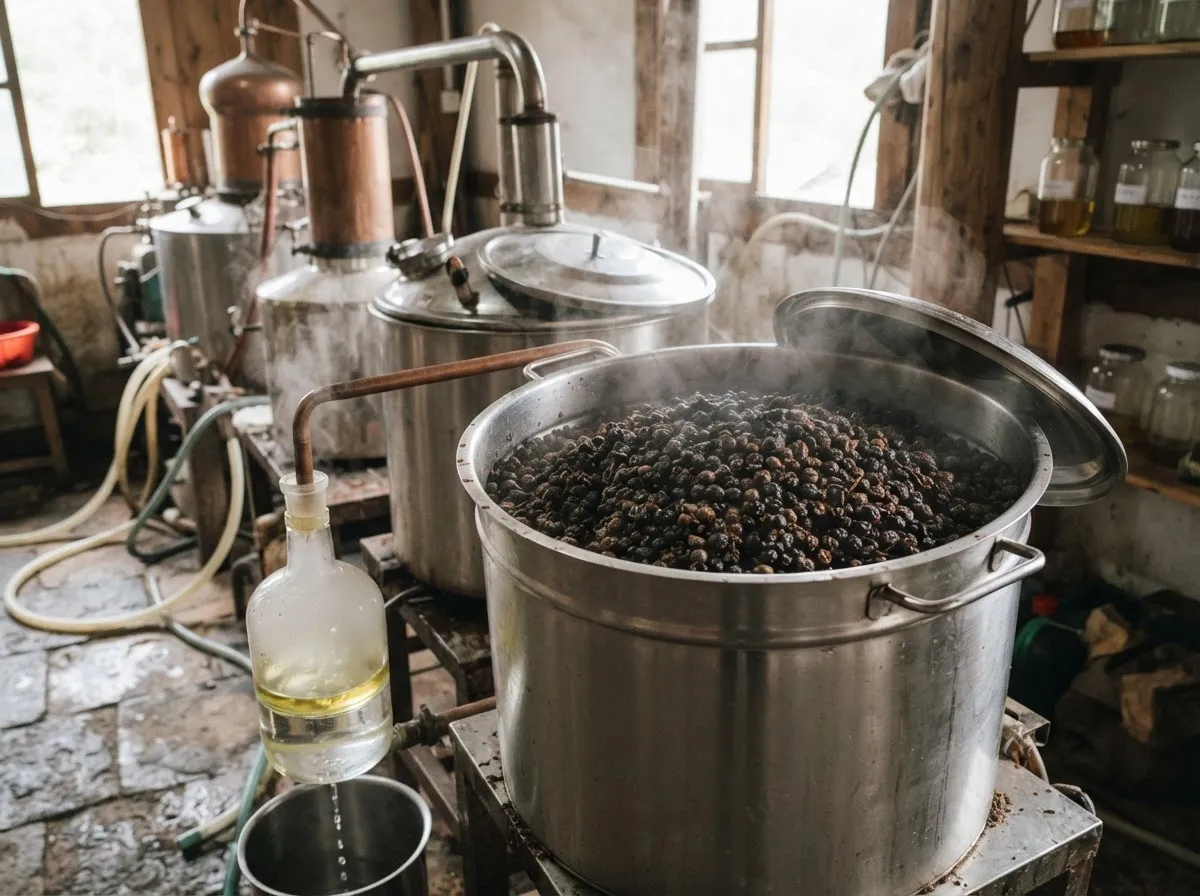
Litsea is distilled from the small ripe fruits, and it is bought for one number. We publish that number for every lot.
Almost nobody buys litsea for its story. They buy it for citral, and they are right to.
Citral is the combination of geranial and neral, and it is what gives this oil its vivid, sweet, long-lasting lemon character. In genuine litsea it typically runs somewhere in the region of seventy to seventy-five percent, which is why the material is a workhorse of the world fragrance trade rather than a curiosity.
It is also why the figure needs publishing. Litsea is one of the main natural sources of citral for isolation, so lots do circulate that have had citral stripped out for sale elsewhere, or that have been topped back up with synthetic citral afterwards. A real GC/MS number against a lot settles that argument in a way adjectives cannot.
The still is ours. On a material this widely used as a feedstock for citral isolation, running the distillation is the only way to be certain the oil in the bottle still contains what it left the fruit with.
The fruit goes in fresh and stays under steam until nothing further comes over. What separates is intensely lemony, rounder and sweeter than expressed lemon peel, and markedly more tenacious.
Every lot then goes out for a GC/MS profile, and we will give you the citral figure for the one you bought. The date it came off the still is on the bottle. No diluents, no fixatives, no stabilisers: undiluted Litsea cubeba, in amber glass.
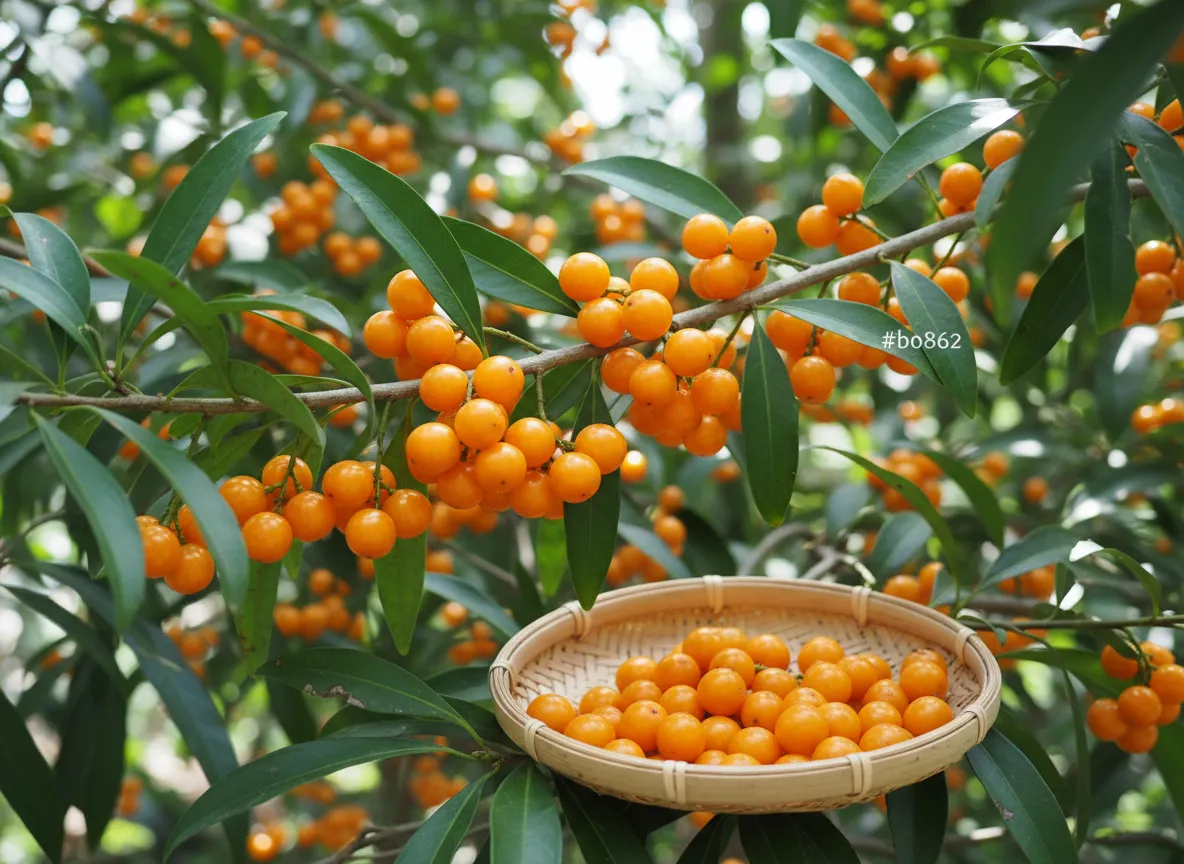
Litsea cubeba is a small tree of the laurel family grown across southern China, Taiwan and Southeast Asia, and it is the fruit we distil rather than a seed or a leaf.
The fruits are tiny and pepper-like, which is where the confusion comes from: they are commonly called berries or mountain pepper, and the oil gets filed among the spice seeds as a result. It does not belong there, and this page says fruit throughout because that is what goes into the still.
They are taken ripe and distilled fresh. Citral is not a compound that rewards keeping material around before it is processed.
Each lot is profiled by an independent laboratory, and on litsea the analysis is the product specification.
Reported as the combined figure, typically around seventy to seventy-five percent in genuine material, and given out per lot.
A citral figure well below the expected band indicates material whose citral has been taken out for isolation.
Screens for reconstituted lots, where synthetic citral has been added back to make a stripped oil look correct.
Ask us for the citral figure on your lot and we will send the profile, or use the contact page.
We make no medical claims for litsea. It is a bright, tenacious lemon note with genuine value in blending, and that is the pitch.
Citral is a recognised skin sensitiser, so keep dilutions modest, take it well down in a carrier, and trial a small area before wider use. It is potent enough that a heavy hand will dominate a blend as well as a wrist.
It ages faster than a wood or a resin. Keep it cool, dark and closed, and read the still date. If a lot's citral figure falls outside the range we expect, it does not get bottled and we wait for one that does.
Small ripe fruits distilled fresh in our own still, with combined geranial and neral measured by GC/MS and quoted per lot.
Then compare it with lemon peel.
Shop Litsea Cubeba Oil