
A Signature May Chang Sunrise Blend with Boswellia Serrata Frankincense
Some mornings ask for something quietly extraordinary. Not a jolt, not a novelty, but a scent that steadies the room and opens the day with intention. This signature citrus blend was built around exactly that feeling: the clean, electric lift of litsea cubeba oil paired with the ancient, resinous warmth of Boswellia serrata frankincense. The result is a may chang sunrise blend that wears the season lightly, bright without being sharp, grounded without feeling heavy.
If you are already comfortable working with litsea cubeba, you know how far its lemony brightness can carry a diffuser blend. If this is your introduction to it, the ultimate guide to blending with litsea cubeba is a useful companion before you dive in here.
Why Boswellia Serrata? The Case for Indian Frankincense in a Morning Blend
There are five or six frankincense species that appear regularly in the aromatic world, and each has a distinct personality. Boswellia carterii leans toward bright, almost citrusy resin. Sacra (Omani or sacred frankincense) is clean, cool, and rarefied. Frereana smells almost waxy and candy-like. But Boswellia serrata, the Indian frankincense, occupies a warmer, woodier register that makes it a natural bridge between citrus top notes and deeper base materials.
Serrata resin is harvested primarily in the forests of India, particularly in Madhya Pradesh and Rajasthan, where the trees grow in dry, deciduous terrain. The oil distilled from this resin tends to carry a softer, spicier edge compared to its East African relatives. There is a faint earthiness underneath, something almost peppery, that gives it real staying power in a blend. In a diffuser recipe built around the volatile brightness of may chang (litsea cubeba), serrata acts as an anchor. It does not compete with the citrus. Instead, it extends the overall arc of the scent, allowing the blend to transition gracefully as the top notes lift away.
For sourcing and more detail on this oil's character, visit the Boswellia serrata product page. Understanding provenance matters here: serrata varies noticeably by region and distillation method, and a well-sourced oil will make a meaningful difference in the final blend.
In practical blending terms, serrata sits comfortably in the base-to-middle register. Its diffusion rate is slower than litsea cubeba's, which means it fills in the later phase of a diffuser session, giving the overall morning diffuser blend a satisfying, layered quality rather than a flat one-note burst.
The Full Recipe: May Chang Sunrise Blend

This recipe is written at two scales: a small working blend for a personal diffuser session, and a pre-made concentrate you can bottle and use across multiple mornings. Both use the same proportional ratios.
Ingredients
| Oil | Role in Blend | Single Session (drops) | Concentrate (drops) | Concentrate (mL approximate) |
|---|---|---|---|---|
| Litsea cubeba (may chang) | Top note, citrus anchor | 5 | 50 | 2.5 mL |
| Boswellia serrata frankincense | Base-to-middle, resinous warmth | 3 | 30 | 1.5 mL |
| Sweet orange (Citrus sinensis) | Middle, softens and rounds | 2 | 20 | 1.0 mL |
| Cedarwood Atlas (Cedrus atlantica) | Base, dry and steadying | 1 | 10 | 0.5 mL |
| Cardamom (Elettaria cardamomum) | Middle, spice lift | 1 | 10 | 0.5 mL |
Total concentrate yield: approximately 6 mL (120 drops)
Suggested use from concentrate in a 100 mL ultrasonic diffuser: 8 to 12 drops per session.
Step-by-Step Blending Instructions
- Prepare your workspace. Use a clean, dry surface. Gather your oils, a small dark glass bottle (5 mL or 10 mL works well for the concentrate), a dropper or pipette, and a notebook to record any adjustments.
- Add the base note first. Place cedarwood Atlas into the bottle before anything else. Starting with the heaviest, slowest-evaporating component lets you smell it clearly before layering over it.
- Add the frankincense. Drop in your Boswellia serrata. Swirl gently and smell. You are looking for that dry, warm, lightly spiced quality that gives this blend its depth.
- Add cardamom. Cardamom is a middle note with a slightly elevated volatility. It bridges the resinous frankincense and the incoming citrus notes. Add it now and swirl again.
- Add sweet orange. This softens the transition toward may chang. The orange rounds out any sharpness in the citrus phase and gives the blend a fuller body.
- Add litsea cubeba last. Litsea cubeba is bright, volatile, and assertive. Adding it last preserves its character. Drop in your measured amount, seal the bottle, and roll it gently between your palms for 30 seconds to integrate the oils without introducing air bubbles.
- Rest before evaluating. Let the sealed concentrate sit for at least 24 hours before diffusing or assessing. Essential oils change as they meld. What smells slightly harsh or flat immediately after blending often smooths considerably after a short rest.
- Label and date your bottle. Include the blend name, the date blended, and the oils used. This habit pays off when you revisit a recipe months later.
Dilution, Patch Testing, and Safety Notes
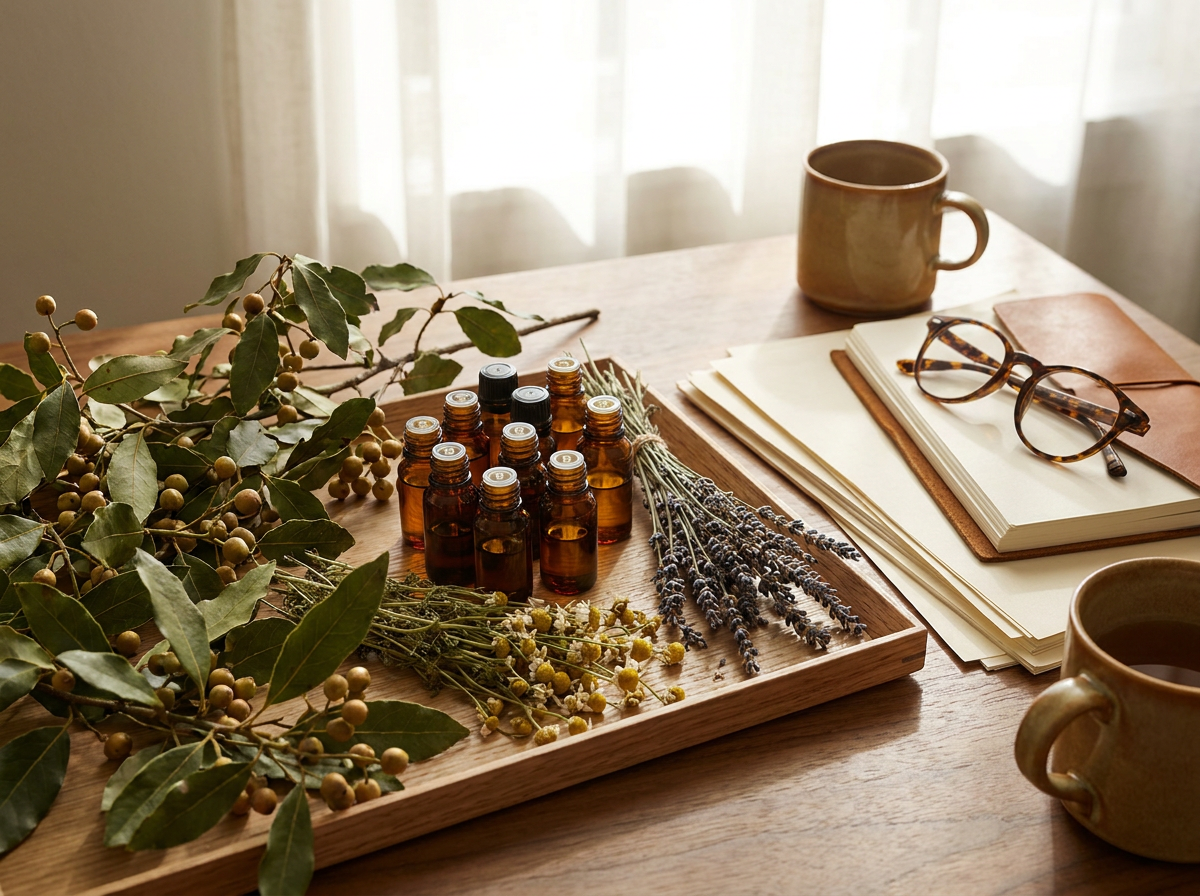
This blend is formulated specifically for aromatic use only: diffusion and inhalation. It is not formulated or intended for topical application as written.
If you wish to adapt this blend for topical use in a carrier oil, a body oil, or a lotion, the following dilution guidance applies:
- General body use (adults): 2% dilution. That is approximately 12 drops of total essential oil blend per 30 mL (1 fl oz) of carrier oil.
- Facial use: 1% dilution or lower is recommended. That is approximately 6 drops per 30 mL carrier.
- For those with sensitive skin: Start at 0.5% to 1% and assess how your skin responds over several sessions.
Patch testing: Before applying any diluted blend to a larger skin area, apply a small amount to the inner forearm. Wait 24 hours and observe for any redness, itching, or sensitivity. Discontinue use if you notice any reaction and consult a qualified healthcare provider.
Litsea cubeba sensitivity note: Litsea cubeba (may chang) contains high levels of citral, a naturally occurring aldehyde that can cause skin sensitization in some individuals, especially at higher concentrations. Always respect dilution guidelines and avoid applying undiluted oil directly to skin.
Citrus phototoxicity: Sweet orange cold-pressed varieties may carry low phototoxicity risk. The sweet orange in this recipe is assumed to be steam-distilled or specified as non-phototoxic. Confirm with your supplier before topical use followed by sun exposure.
Pregnancy, nursing, children, and those with health conditions: Consult a qualified healthcare provider before using essential oils.
Storage and Shelf Life
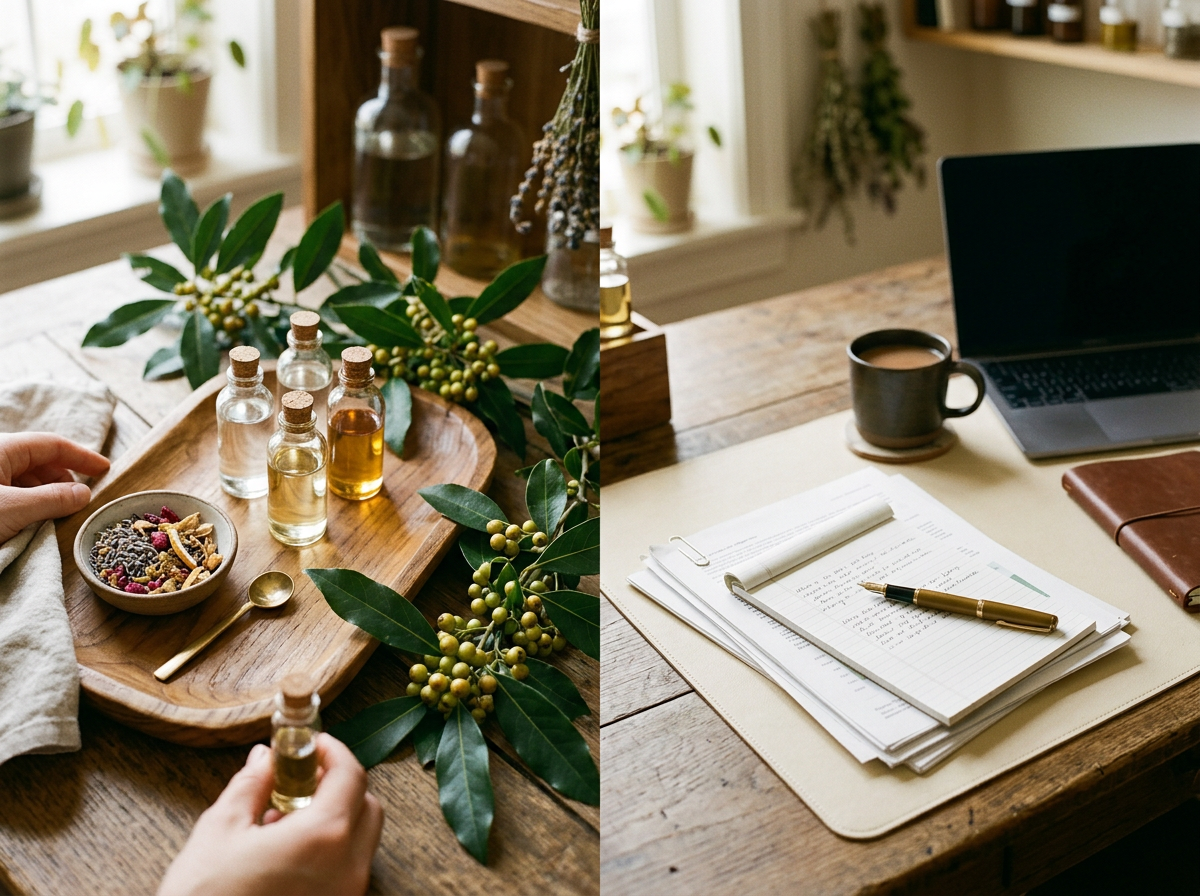
Store your concentrate in a dark glass bottle (amber or cobalt) with a tight-fitting cap. Keep it away from heat, direct sunlight, and humidity. A cool drawer or a dark cabinet shelf works well.
Properly stored, this blend should maintain its aromatic quality for 12 to 18 months. The citrus components (litsea cubeba and sweet orange) are the most sensitive to oxidation and will begin to fade first. If the blend develops a flat or slightly rancid undertone, it is past its best for aromatic use.
The cedarwood and frankincense components are naturally more stable and may extend the blend's overall life somewhat. Labeling your bottles with a blending date is the simplest way to track freshness.
Variations on the May Chang Sunrise Blend
Once you have the base recipe working well for you, these adjustments open up the blend in different directions. Each variation keeps litsea cubeba and Boswellia serrata as the pairing at the core, so the signature citrus blend character remains intact.
Variation 1: The Cooler Morning (Add Blue Tansy or Eucalyptus Globulus)
Replace cardamom with 1 drop of eucalyptus globulus or, for something softer, a single drop of blue tansy. This shifts the blend toward a crisper, fresher atmosphere. It suits rooms with good airflow and works especially well as a morning diffuser blend in warmer months when you want something invigorating but not spicy. For more ideas along these lines, the summer bright season blending guide has plenty of direction.
Variation 2: The Deeper Sunrise (Add Vetiver or Patchouli)
Add a single drop of vetiver or light patchouli to the base. This grounds the blend further and gives it a more meditative, contemplative quality. The citrus brightness is still present, but the dry-down is longer and more complex. This version suits a slower, quieter morning routine. Vetiver in particular has a remarkable tenacity that will keep the blend present in the room well past the initial diffuser session.
Variation 3: The Floral Bridge (Add Ylang Ylang or Neroli)
Introduce one drop of ylang ylang extra or a drop of neroli (diluted form, if working with cost in mind). Ylang ylang adds a soft, honeyed floral note that pairs surprisingly well with the spice of serrata and the lift of may chang. Neroli brings a more refined, almost powdery brightness that makes the blend feel more like a botanical fine fragrance. Use a light hand with ylang ylang in particular: it is potent and can easily tip into overwhelming if overdone.
Building Your Morning Ritual Around This Blend
A well-made diffuser blend does more than scent a room. It creates a sensory cue, a small signal that this time belongs to you, before the demands of the day accumulate. The may chang sunrise blend was designed with that in mind. The litsea cubeba opens everything up with a clean, bright citrus note. The Boswellia serrata holds the room steady as the morning progresses. The sweet orange keeps the whole composition approachable rather than austere.
Set your diffuser running 10 to 15 minutes before you begin your morning ritual, whether that is a slow cup of coffee, journaling, or simply a few quiet moments before the household wakes. The blend will be present without demanding attention, which is exactly what a good aromatic backdrop should do.
If you find yourself drawn to exploring more signature citrus blend options with litsea cubeba at the center, the 10 lemon-bright diffuser blend recipes collection covers a wide range of moods and seasons. There is a great deal of territory to explore when you start working with may chang seriously, and these recipes make a solid starting point.
This is a blend that rewards patience. Give the concentrate time to rest, get familiar with how the individual oils behave in your space and your diffuser, and adjust the ratios by a drop or two once you have a baseline. Blending is a practice, not a formula. The recipe above is a beginning, and what you do with it from here is entirely your own.