A Litsea Cubeba Scent Inhaler, Counted in Drops
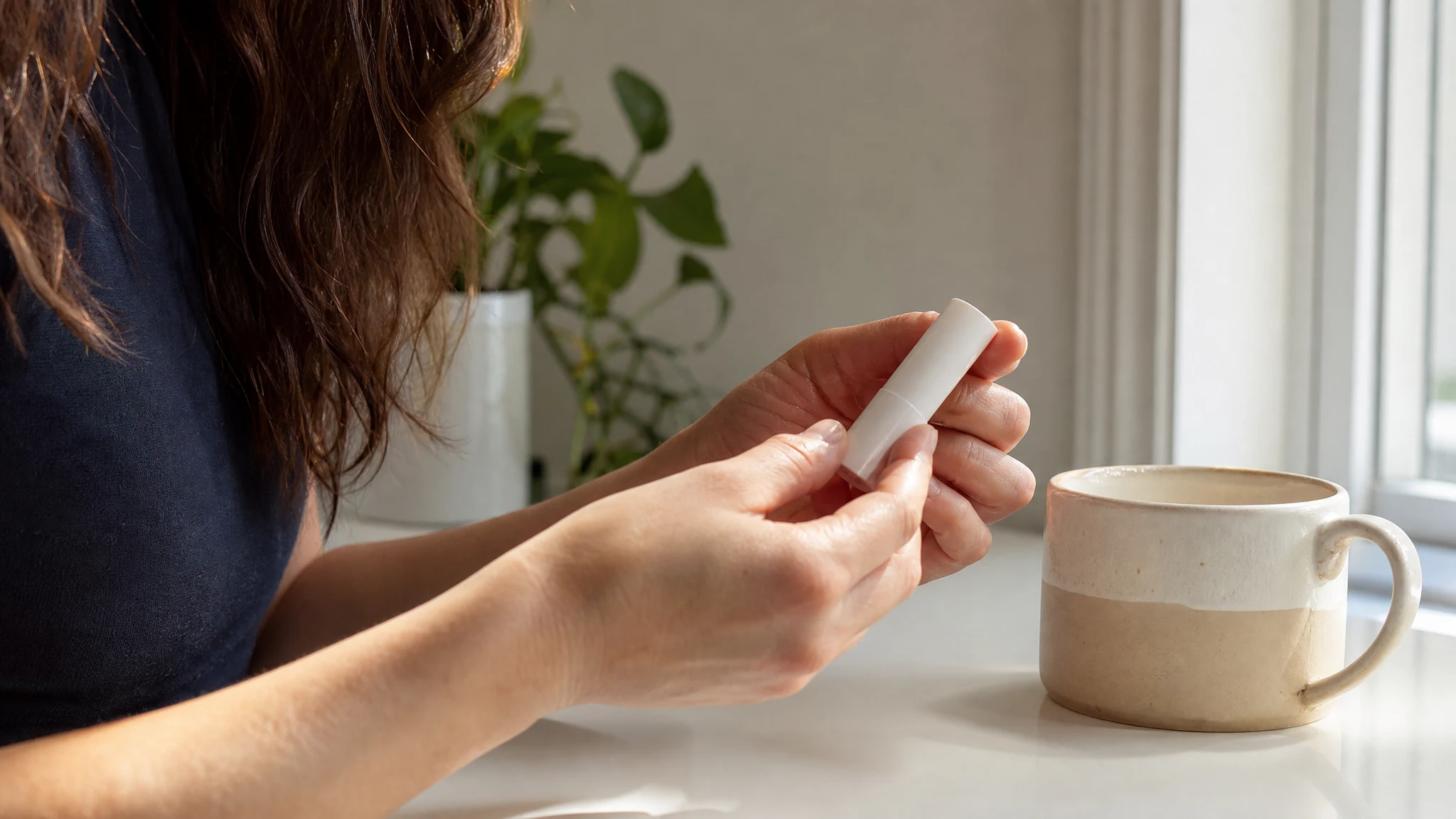
Pop the cap, bring the tube to about the length of your hand from your nose, and take one slow sniff. That is the whole ritual of a scent inhaler, and it is a lovely way to meet litsea cubeba's lemon-drop aroma without scenting an entire room. Because the oil sits on a wick close to your face, the recipe is small on purpose: a couple of drops, counted.

Litsea Cubeba Essential Oil
Our own Litsea Cubeba Essential Oil, in sizes from 0.5 oz to bulk.
From $12.99
Shop Now →What goes in a scent inhaler
An inhaler is a small tube with a cotton wick inside and a snug cap. Blank inhalers, spare wicks and tweezers come from an aromatherapy, soap-making or craft supplier; we sell only the oil. When you shop for a tube, look for a body that is glass or metal rather than plastic, since we have no compatibility information for litsea oil and plastics, and ask whether the wick is meant to take undiluted essential oil. Our oil is sold neat, so it goes onto the wick as it comes from the bottle.
We think of an inhaler as a scent accessory, nothing more. The FDA says aromatherapy products are regulated according to how they are intended to be used, judged from labeling, websites and advertising, so we describe the aroma and how to handle the oil and leave it there (see the FDA's Aromatherapy page).
Counting the drops
A wick can soak up far more oil than anyone needs, so capacity is not the guide. Closeness is. A drop of our oil weighs roughly 44 mg (the one batch on our Certificate of Analysis has a relative density of 0.883, and a milliliter is about 20 drops from a typical dropper; droppers vary, so weigh if you own a small scale). Our suggestion, arithmetic and judgment rather than a published standard, is a starting point of two drops, about 88 mg, with a ceiling of three.
| Drops on the wick | Weight, about | How we would use it |
|---|---|---|
| 2 | 88 mg | Where to begin |
| 3 | 130 mg | The most we would put on one wick |
A 0.5 oz bottle holds roughly 296 drops, so at two drops a wick there is plenty of room to make a fresh one whenever the first fades, which is a better plan than loading a wick heavily on day one.
Making one
- Lift a clean cotton wick with tweezers. Citral, the main aroma compound in litsea oil, is a recognized skin sensitizer, so we keep neat oil off fingertips.
- Add two drops to the wick, seat it in the tube and close the cap.
- Open, hold the tube at arm's length and sniff once. If the scent is faint after a few minutes, add a third drop and stop there.
- Label the tube with the oil and the date.
- Wipe the outside of the tube, wash your hands, and keep it capped between uses. Use one oil per wick and replace the wick rather than reusing it for something else.
Our shelf-life guidance is typically one to two years for the oil, tightly capped, cool and dark. A tube riding around in a pocket or a hot car is not cool or dark, so we would treat a wick as something you refresh, not something you keep.
Why we go lower than the diffuser
EFSA's panel reviewed litsea berry oil and concluded it should be regarded as an irritant to skin and eyes, a skin sensitizer, and that it may also be assumed to be a respiratory sensitizer (EFSA FEEDAP opinion, 2021). That review was written for animal feed, so it is not guidance for an inhaler, but it tells us how the oil behaves: this is a potent aroma material, and it deserves a light hand when the source is held near the nose. In practical terms, that means short sniffs, a few centimeters of distance, and no use at all if your nose, eyes or throat react. Anyone with asthma or another breathing condition should ask a physician before using any inhaled essential oil.
Plan the circle of people around you, too. Our guidance is to keep the oil away from eyes, children and pets. An open tube is not a diffuser, but a cat or toddler that gets hold of a wick has met neat oil, so a tube lives in a bag or a drawer, not on a table. Our posts on litsea oil and pets and pregnancy and children cover what the sources say. If you are pregnant or nursing, ask your clinician first. The oil is for external, aroma use only; if anyone swallows it, call Poison Help at 1-800-222-1222 (Poison Control).
Where to go next
If you want the scent in a room rather than at arm's length, our water diffuser article works through drops and air. The chemistry behind that lemon character is in our citral explainer, and anything that touches skin should start with skin basics.
An inhaler rewards restraint. One wick, two drops and a slow sniff will tell you quickly whether litsea cubeba's sunny, sweet lemon is the aroma you want to carry around.
Litsea Cubeba Essential Oil
Litsea Cubeba Essential Oil from our own shop, in sizes from 0.5 oz to bulk.
From $12.99
Shop Now →