
What Mosquito Studies Say About Litsea Cubeba Oil
Litsea cubeba is one of the few essential oils that keeps turning up in mosquito research, and the results are interesting: in a 2006 screening of 41 plant oils on volunteers’ skin, it was among the five most effective. Here is what the studies measured, and why we still point anyone who needs real mosquito protection toward a registered repellent.
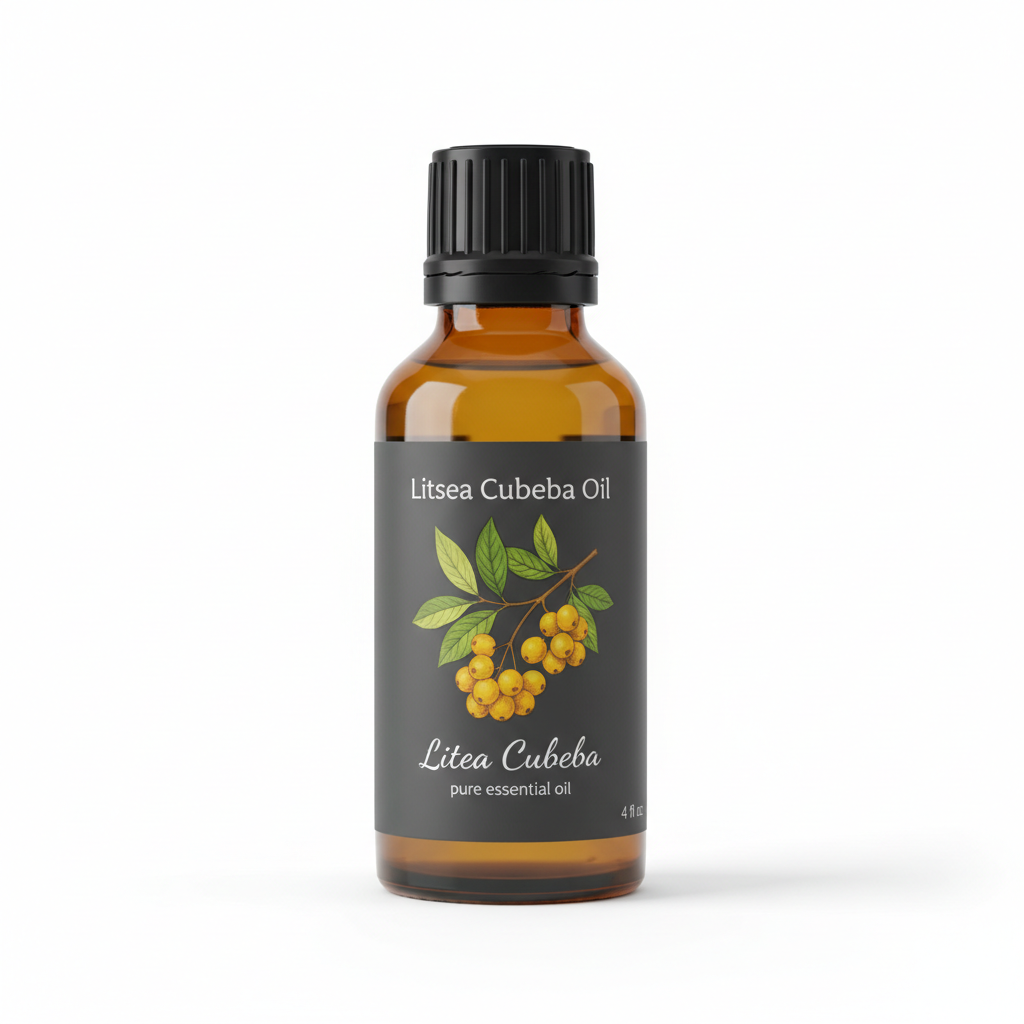
Litsea Cubeba Essential Oil
Our own Litsea Cubeba Essential Oil, in sizes from 0.5 oz to bulk.
From $12.99
Shop Now →Three studies, three different questions
The first, by Amer and Mehlhorn, tested 41 plant oils and 11 oil mixtures on human volunteers against three mosquito species. Litsea, cajeput, niaouli, violet and catnip were the five best, with protection of up to 8 hours at the very best and complete repellency. That 8 hours is the top result across those five oils, not a litsea-specific figure, and the authors add that the oils need a particular formulation to stay on the skin. That detail matters, because it is the whole story of natural repellents in miniature: the aroma is lively, and it is also fleeting.
The second study, from Thailand in 2008, asked a different question. Noosidum and colleagues put Aedes aegypti mosquitoes in test chambers and found that litsea cubeba oil made them irritated enough to leave. Few died afterwards (2.3% to 20.4%, depending on the test). A chamber like that measures escape behaviour, not bites on skin, so it shows the oil bothers mosquitoes without telling you how long protection would last.
The newest is a 2026 paper from Sutthanont and colleagues, and it is the closest to a real product. They made a ready-to-use spray with 6% litsea cubeba oil by weight and tested it in the World Health Organization’s arm-in-cage protocol. Median complete protection lasted 225 minutes against Culex quinquefasciatus and 120 minutes against Aedes aegypti and Anopheles dirus. A skin-patch test in 48 healthy volunteers showed no visible reactions up to 96 hours, and the authors call for semi-field and field work next. Two hours in a cage with a purpose-built spray is a useful result for a research team. It is not the same as relying on a bottle in a place where mosquitoes carry disease.
What 6% really means
Six percent is a lot of oil. In 100 g of spray that is 6 g, about 6.8 ml or roughly 130 drops (arithmetic from our batch density of 0.883 g/ml and about 20 drops to the millilitre). Our dilution guidance for skin is 0.5% to 2%, so the study’s spray carries three times the top of that range.
The fragrance industry’s citral standard (IFRA) puts skin insect repellents in the same category as body lotions, with a citral cap of 0.15% in the finished product. If a litsea fruit oil is roughly two-thirds to nine-tenths citral, as published analyses show, that cap allows about 0.17% to 0.23% oil, which makes 6% somewhere between 26 and 35 times higher. That is arithmetic on a literature range, not a statement about our oil, and the standard is an industry system for fragrance mixtures, not a law for home mixing. The takeaway is simply that the oil level that gave two hours in a cage is far above what fragrance-safety assessors allow in a leave-on skin product, which is one more reason not to copy it. Our skin basics article covers sensitisation in more detail.
Where real protection comes from
A registered repellent has been through a different process. EPA explains that a registration number means the company gave the agency technical information on the product’s safety and its effectiveness against mosquitoes or ticks, and its search tool lists only registered products. If you are travelling, if there is local mosquito-borne illness, or if you are choosing for a child or during pregnancy, that is the shelf to shop from, and a pharmacist can help you pick.
We sell litsea cubeba as an aroma oil, neat, and we make no repellent claim for it. If you are planning to sell a spray with insect claims, those claims bring their own regulatory rules, and that conversation belongs with a regulatory consultant or your state pesticide office. Our IFRA article covers the fragrance paperwork a buyer should ask for, and the litsea versus citronella comparison sets the two oils side by side.
The studies are a good reason for laboratories to keep investigating. For the rest of us, the oil is still best enjoyed for its lemon-bright scent.
Litsea Cubeba Essential Oil
Litsea Cubeba Essential Oil from our own shop, in sizes from 0.5 oz to bulk.
From $12.99
Shop Now →Sources & Further Reading
- Amer A, Mehlhorn H, 2006. Repellency effect of forty-one essential oils against Aedes, Anopheles, and Culex mosquitoes. Parasitology Research.
- Noosidum A et al., 2008. Excito-repellency properties of essential oils from Melaleuca leucadendron L., Litsea cubeba (Lour.) Persoon, and Litsea salicifolia (Nees) on Aedes aegypti (L.) mosquitoes. Journal of Vector Ecology.
- Sutthanont N et al., 2026. Topical mosquito repellency of a Litsea cubeba essential oil spray against Aedes aegypti, Anopheles dirus, and Culex quinquefasciatus. Scientific Reports.
- US EPA. Find the Repellent that is Right for You.
- IFRA, 2020. IFRA Standard: Citral (Amendment 49).
- IFRA, 2023. Guidance for the Use of IFRA Standards (June 30, 2023).
- Si L et al., 2012. Chemical composition of essential oils of Litsea cubeba harvested from its distribution areas in China. Molecules.