
How IFRA Limits Litsea Cubeba Through Citral
If you go looking for the IFRA limit on litsea cubeba oil, you will not find one. The oil has no entry of its own. The limit sits on a molecule inside it, citral, and it applies to the finished product you make. Once that clicks, the rest of the rulebook becomes easy to follow.
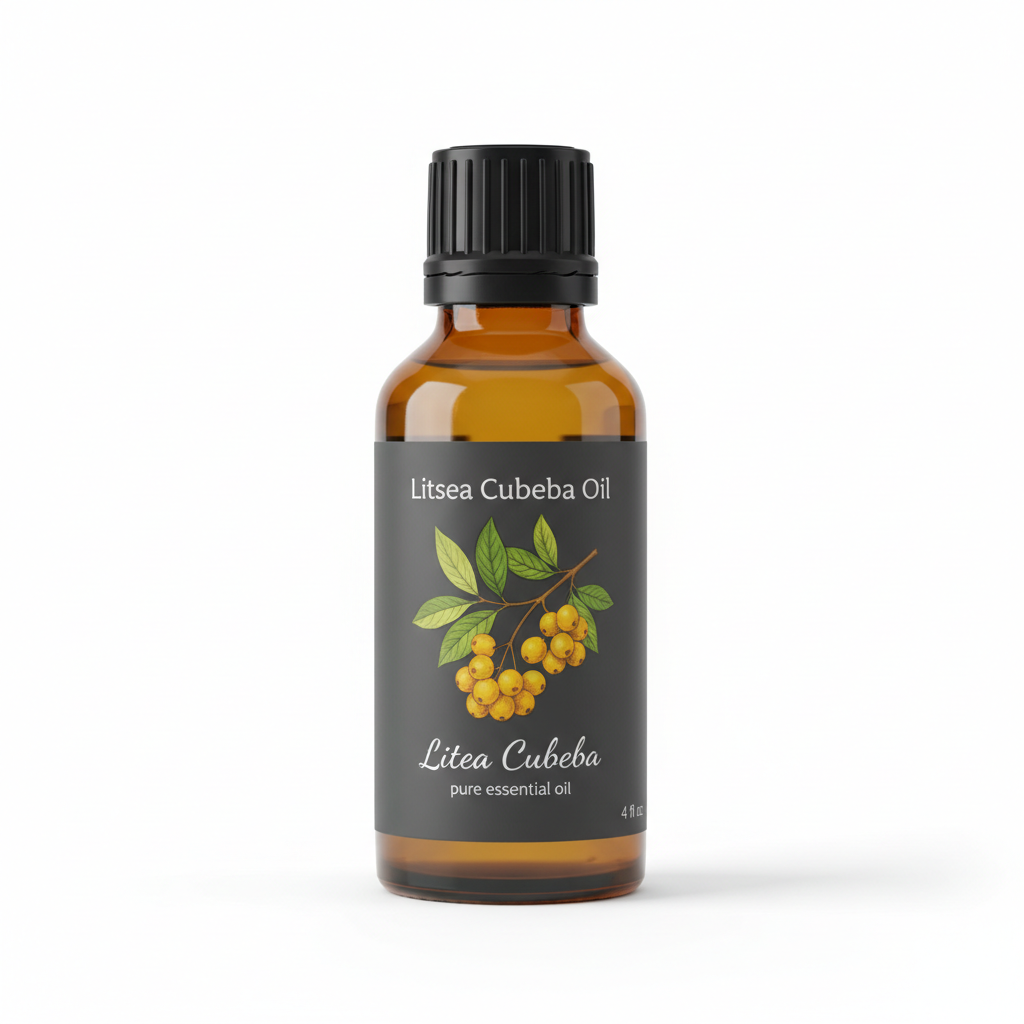
Litsea Cubeba Essential Oil
Our own Litsea Cubeba Essential Oil, in sizes from 0.5 oz to bulk.
From $12.99
Shop Now →What the citral standard says
IFRA, the fragrance industry's safety body, publishes a standard for citral that caps how much citral a finished product may contain. The cap depends on the product category, and the standard names skin sensitisation and systemic toxicity as the reasons. In the 2020 text (Amendment 49) the caps run like this:
- Fine fragrance (Category 4): 0.60%
- Body lotions, creams and skin-applied products (Category 5A): 0.15%
- Bar soap and body wash (Category 9): 1.2%
- Reed diffuser liquid and household cleaners (Category 10A): 1.2%
- Candles of all types (Category 12): no restriction
Which product belongs in which category comes from IFRA's guidance document, which also reminds readers that following the standards may not be enough on its own to meet regulatory requirements. Amendments change the numbers over time, so anyone selling a product should check the current text.
From citral cap to oil share
Here is the sum that makes this practical. Divide the category cap by the fraction of citral in your oil, and you get the most oil the finished product can carry. Literature gives a spread for litsea fruit oil: about 79% to 87% citral in laboratory distillates from China, and about 66% across six commercial batches in an EFSA opinion (that second figure is our addition of two published means). Those are figures from papers, not statements about our oil.
| Category | Citral cap | Oil share allowed (66% to 87% citral) |
|---|---|---|
| 4, fine fragrance | 0.60% | about 0.69% to 0.91% |
| 5A, body lotion | 0.15% | about 0.17% to 0.23% |
| 9, bar soap | 1.2% | about 1.4% to 1.8% |
| 10A, reed diffuser, cleaner | 1.2% | about 1.4% to 1.8% |
| 12, candles | no cap | not limited by this standard |
The table is arithmetic you can repeat with your own batch's figure. One thing it shows clearly: litsea is a strong oil, and at leave-on skin levels the allowance is small. A body lotion under Category 5A can carry well under a quarter of one percent of this oil.
Where our own guidance fits
For personal skin use we recommend diluting litsea cubeba to between 0.5% and 2% in a carrier oil and patch testing first. The IFRA numbers tell us where to point the starting line. A 0.5% dilution is already above the Category 5A oil share in the table, and 2% is roughly nine to twelve times above it. So we suggest starting at the low end, or below it, rather than treating 2% as a comfortable number. IFRA caps are finished-product limits for items made for sale, and our dilution line is a general home guide, but when a product will leave your hands, the IFRA calculation is the one a retailer or regulator will ask for. A cosmetic chemist or regulatory consultant is the right person to run it for a specific product.
Why composition data matters
Because the cap is on citral, the calculation only works with the citral percentage of your batch. We sell one litsea cubeba oil, and if your product needs a citral figure, a GC-MS profile or allergen data, ask us in writing through the contact page before you order and keep the answer. The certificate of analysis we publish covers one batch and gives density, refractive index and optical rotation. Our quality article explains what each kind of document can answer.
The good news for makers is the last line of the table. Candles sit in Category 12, which has no citral cap, and plenty of litsea work happens there. For skin and soap, a little goes a long way. Our skin basics article covers dilution and patch tests, and the citral comparison shows how litsea sits beside other citral-rich oils.
Think of the IFRA citral standard as a budget for lemon. Know your oil's citral share, know your category, and the arithmetic tells you how far a bottle will stretch.
Litsea Cubeba Essential Oil
Litsea Cubeba Essential Oil from our own shop, in sizes from 0.5 oz to bulk.
From $12.99
Shop Now →Sources & Further Reading
- IFRA. IFRA Standard: Citral (Amendment 49, 2020). ifrafragrance.org/standards/IFRA_STD_021.pdf
- IFRA. Guidance for the use of IFRA Standards (51st Amendment). ifrafragrance.org guidance for the use of IFRA Standards
- Si L et al. Chemical composition of essential oils of Litsea cubeba harvested from its distribution areas in China. Molecules, 2012. pmc.ncbi.nlm.nih.gov/articles/PMC6268156
- EFSA FEEDAP Panel. Safety and efficacy of a feed additive consisting of an essential oil from the fruits of Litsea cubeba (Lour.) Pers. (litsea berry oil) for use in all animal species (FEFANA asbl). EFSA Journal, 2021. pmc.ncbi.nlm.nih.gov/articles/PMC8193530