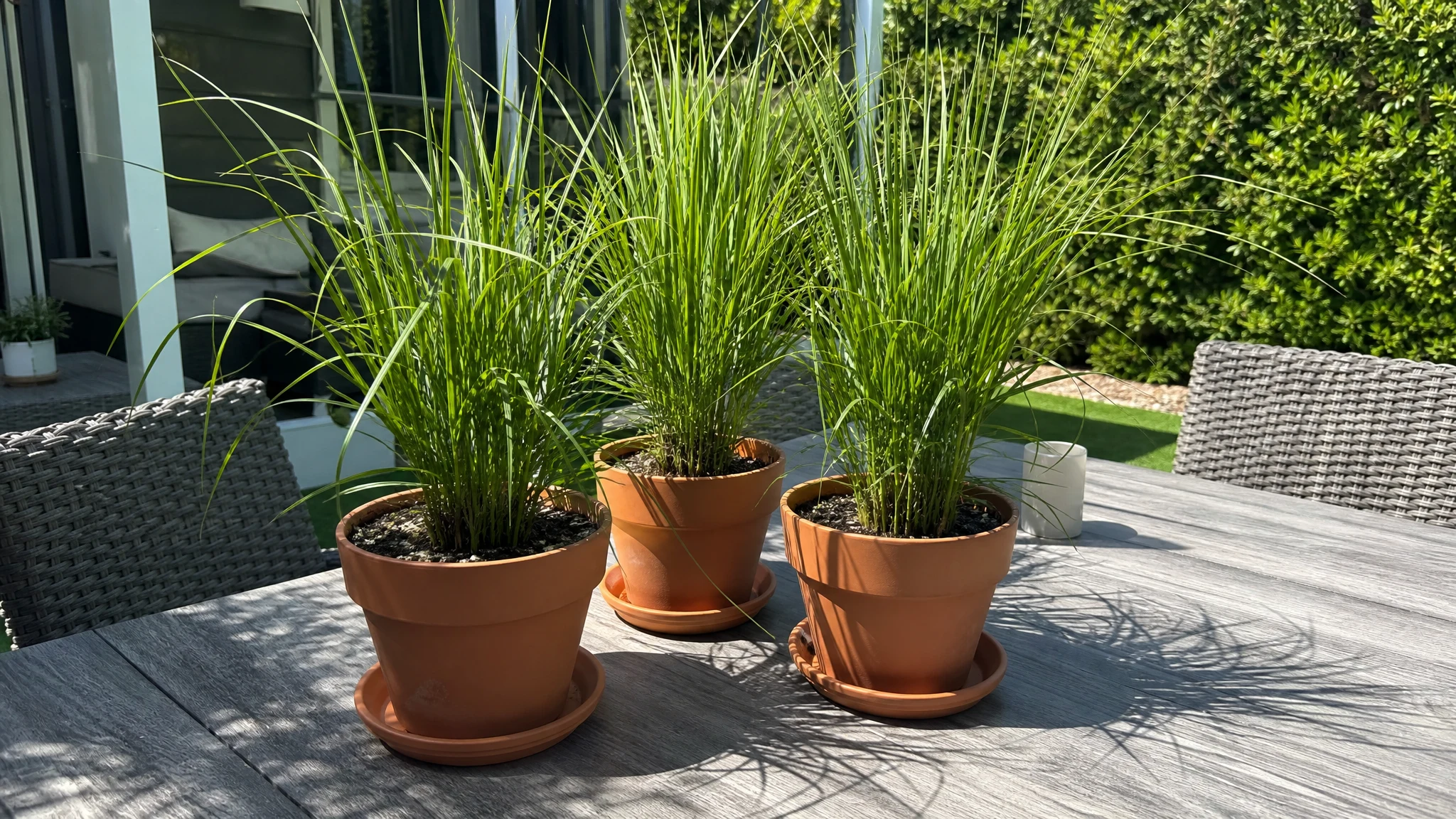
Litsea Cubeba or Citronella: Two Lemons, Two Scents
Open a summer porch candle and open a bottle of litsea cubeba, and you might swear both smell of lemon. They do, in a way, but the lemon comes from different molecules, and that difference shapes how each oil smells, blends and gets used. Here is a friendly side-by-side.

Litsea Cubeba Essential Oil
Our own Litsea Cubeba Essential Oil, in sizes from 0.5 oz to bulk.
From $12.99
Shop Now →Two lemons, two molecules
Litsea cubeba is a fruit oil, steam-distilled from the small pepper-like fruit of a tree in the laurel family. Its signature is citral, the pair of molecules called geranial and neral. In laboratory distillates from eight sites across six Chinese provinces, citral came to roughly 79% to 87% of the oil, with very little limonene. That is why litsea smells like a sharp, sweet lemon drop rather than a freshly cut peel.
Citronella is a grass oil, distilled from the leaves of Cymbopogon grasses. A Brazilian analysis of steam-distilled C. nardus found citronellal as its main component at about 37%. Citronellal is a different molecule from citral, and it is what makes citronella smell like itself rather than like litsea. One sample from one place is only a snapshot, since grass oils vary with origin and species. But the pattern holds: citral leads in litsea, citronellal leads in citronella.
We describe our own oil as intense, sweet and lemon-bright, with a soft fruity, floral roundness. If you want to know which one suits a project, the quickest answer is a blotter test. Smell each side by side before you commit to a bottle. We sell litsea cubeba only, so citronella comes from a craft or aromatherapy supplier.
Choosing by scent and by job
- A bright, candy-lemon top note for candles, soap or a room scent: litsea. A little goes a long way, and it blends well with ginger, rosemary, geranium, vetiver, bergamot and ylang ylang.
- A different, citronellal-led lemon note: citronella is the one to sniff, and your nose will tell you whether it fits.
- Combining them: a formulator would treat them as separate ingredients, because citral and citronellal are different materials with their own safety data. If you plan to make a product for sale, check each one's current IFRA standard.
For litsea, the standard that matters is the one on citral. Our IFRA article explains how to turn it into an oil share, and our citral article tells the story of the molecule behind the scent.
A word about mosquitoes
Citronella has long been associated with outdoor evenings, so it is worth being plain about what the authorities say. A review of plant-based repellents in the Malaria Journal reports that citronella-based repellents only protect against host-seeking mosquitoes for about two hours, because the oils evaporate quickly, and concludes that products containing only essential oils should not be recommended for disease-endemic areas. CDC's Yellow Book page on mosquitoes and ticks lists registered active ingredients such as DEET, picaridin and oil of lemon eucalyptus products, and says the effectiveness of non-EPA-registered insect repellents, including some natural ones, is unknown.
We sell litsea cubeba as an external cosmetic and craft oil and make no repellent claim for it. If mosquitoes carry disease where you live or travel, a physician or pharmacist can point you to a registered product. Our repellent article covers what the published studies on litsea actually measured.
Using either one with care
Both are concentrated materials. For skin, we recommend diluting litsea cubeba to between 0.5% and 2% in a carrier oil and patch testing a small area first, keeping it away from eyes, children and pets, and never taking it internally. Because citral is a recognised skin sensitiser, we start at the low end. The skin basics article walks through it.
Choose the one whose smell makes you smile, and let the molecule behind it guide how you use it.
Litsea Cubeba Essential Oil
Litsea Cubeba Essential Oil from our own shop, in sizes from 0.5 oz to bulk.
From $12.99
Shop Now →Sources & Further Reading
- Si L et al. Chemical composition of essential oils of Litsea cubeba harvested from its distribution areas in China. Molecules, 2012. pmc.ncbi.nlm.nih.gov/articles/PMC6268156
- Aguiar RWS et al. Fumigant antifungal activity of Corymbia citriodora and Cymbopogon nardus essential oils and citronellal against three fungal species. The Scientific World Journal, 2014. pmc.ncbi.nlm.nih.gov/articles/PMC3926400
- Maia MF, Moore SJ. Plant-based insect repellents: a review of their efficacy, development and testing. Malaria Journal, 2011. pmc.ncbi.nlm.nih.gov/articles/PMC3059459
- CDC Yellow Book. Mosquitoes, Ticks, and Other Arthropods. cdc.gov Yellow Book, Mosquitoes, Ticks, and Other Arthropods