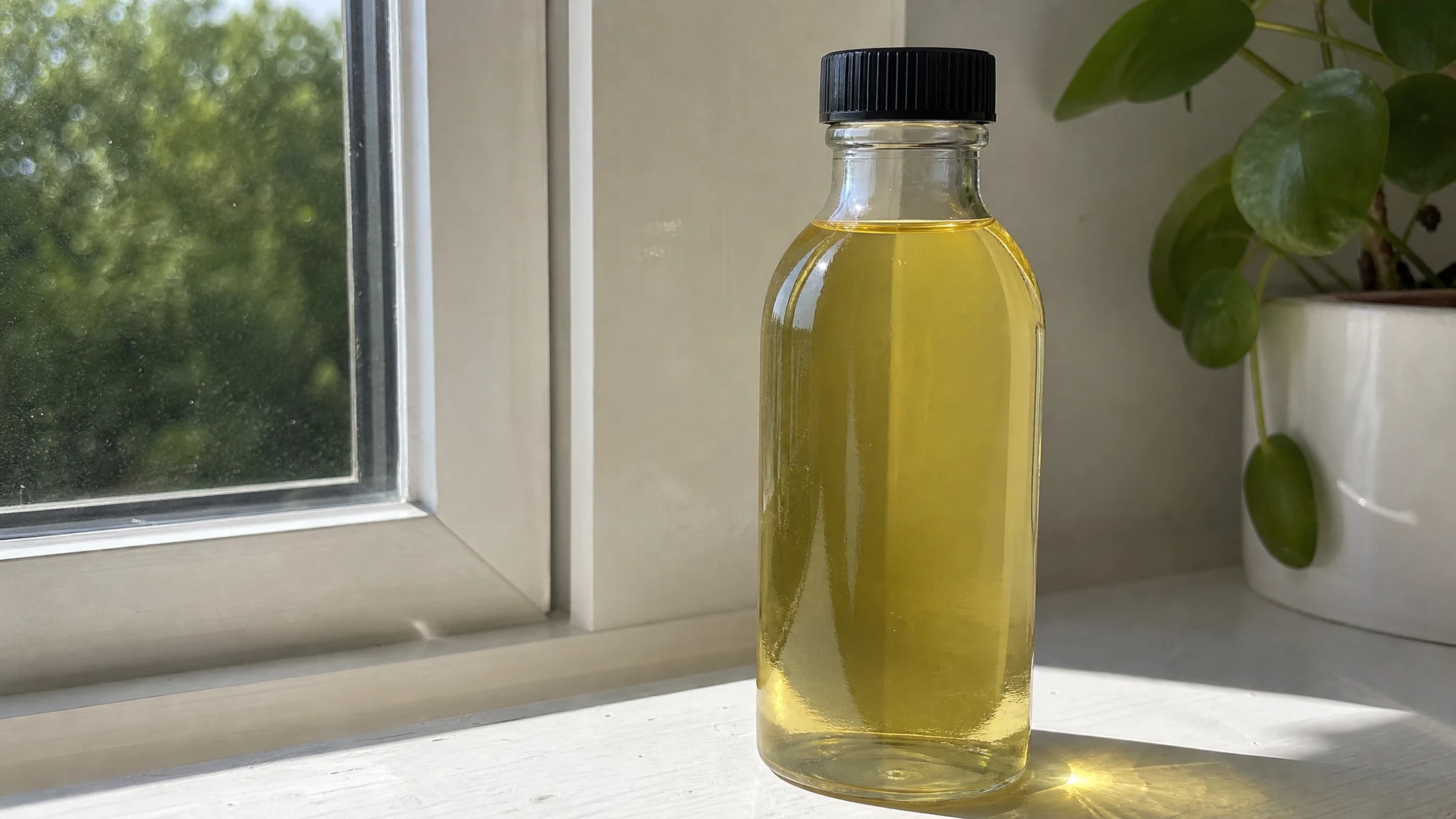
What a Litsea Cubeba Certificate Can Tell You
Ask a few sellers about their litsea cubeba oil and you will hear the same word again and again: citral. It is the molecule that gives this oil its bright, candy-lemon sparkle, so it is natural to treat it as the quality score. But a citral percentage only means something when you know how it was measured, and that is where most buyers get tangled.

Litsea Cubeba Essential Oil
Our own Litsea Cubeba Essential Oil, in sizes from 0.5 oz to bulk.
From $12.99
Shop Now →Why two honest citral numbers can disagree
Researchers who distilled litsea fruit from eight sites across six Chinese provinces found neral plus geranial (the two halves of citral) between about 79% and 87% of the oil. A European Food Safety Authority opinion on a commercial steam-distilled litsea oil reported six batches whose geranial and neral means add up to roughly 66%. That sum is our arithmetic, not a figure the opinion prints. Both are real litsea cubeba, and both are reported honestly.
The gap comes from the sample, the distillation and the instrument. EFSA even noted that one type of GC-MS reading underestimated geranial in two of its batches. So a citral figure is a number from a specific method on a specific lot, and it should be compared only with figures made the same way. A seller who says "70 to 85%" without a batch report is describing a range, not telling you about the bottle in your hand.
Four documents, four different questions
It helps to think of each piece of paperwork as answering one question and no more.
- A physical-constants certificate (density, refractive index, optical rotation) answers "is this the right sort of liquid?" It is a quick identity check against stated ranges.
- A GC-MS or GC-FID report for a named batch answers "what is in it?" It gives constituent percentages, and a good one prints the method and the laboratory.
- A safety data sheet answers "how do I handle it?" EFSA's reading of a supplier sheet lists skin irritation, skin sensitisation and an aspiration hazard.
- An IFRA certificate answers "does this batch fit a product category's limits?" and it only makes sense when it was calculated from a composition report.
None of these substitutes for another. The most useful habit is simply to match the document to the question you are asking.
What our certificate of analysis covers
We publish a Certificate of Analysis for one batch, LICQGCLCCNC003A. It names the botanical as Litsea cubeba, the part used as fruit and the extraction as steam distilled, and it gives a best-by date of 04/30/2028. Appearance and smell are recorded as complying with a light yellow liquid and a sweet, fruity standard. The measured values are a relative density of 0.883 (standard range 0.880 to 0.890), a refractive index of 1.483 (1.480 to 1.490) and an optical rotation of +10.04 degrees (0 to +15). All three sit inside the stated ranges.
That is a solid identity check for that batch. If your formulation depends on a citral percentage, a GC-MS profile, origin, allergen or IFRA data, ask us in writing through the contact page before you order, and keep the written answer with your records. If you are weighing a larger volume, the wholesale page explains how sample bottles work.
A short list for any seller
- Do they give the botanical name and the part used? You are looking for Litsea cubeba and fruit. "May chang" on its own is a common name, not an identity.
- Does the batch number on the paperwork match the bottle? A report for one batch says nothing about the next.
- If a citral figure is quoted, which method produced it? Area percent from GC-FID and GC-MS can differ for the same oil.
- Is the oil in amber glass with a sealed cap? We recommend keeping litsea tightly closed in a cool, dark place, so a light-blocking bottle is a good sign.
Our IFRA article shows what to do with a citral figure once you have one, and reading a label and GC-MS report walks through the report itself.
Good litsea buying comes down to one idea: let the paperwork answer the question you are really asking, and ask the seller for the missing piece in writing. Do that and the citral numbers stop being a puzzle and become useful information.
Litsea Cubeba Essential Oil
Litsea Cubeba Essential Oil from our own shop, in sizes from 0.5 oz to bulk.
From $12.99
Shop Now →Sources & Further Reading
- Si L et al. Chemical composition of essential oils of Litsea cubeba harvested from its distribution areas in China. Molecules, 2012. pmc.ncbi.nlm.nih.gov/articles/PMC6268156
- EFSA FEEDAP Panel. Safety and efficacy of a feed additive consisting of an essential oil from the fruits of Litsea cubeba (Lour.) Pers. (litsea berry oil) for use in all animal species (FEFANA asbl). EFSA Journal, 2021. pmc.ncbi.nlm.nih.gov/articles/PMC8193530