Litsea Cubeba or Lemongrass: Two Citral Oils Compared
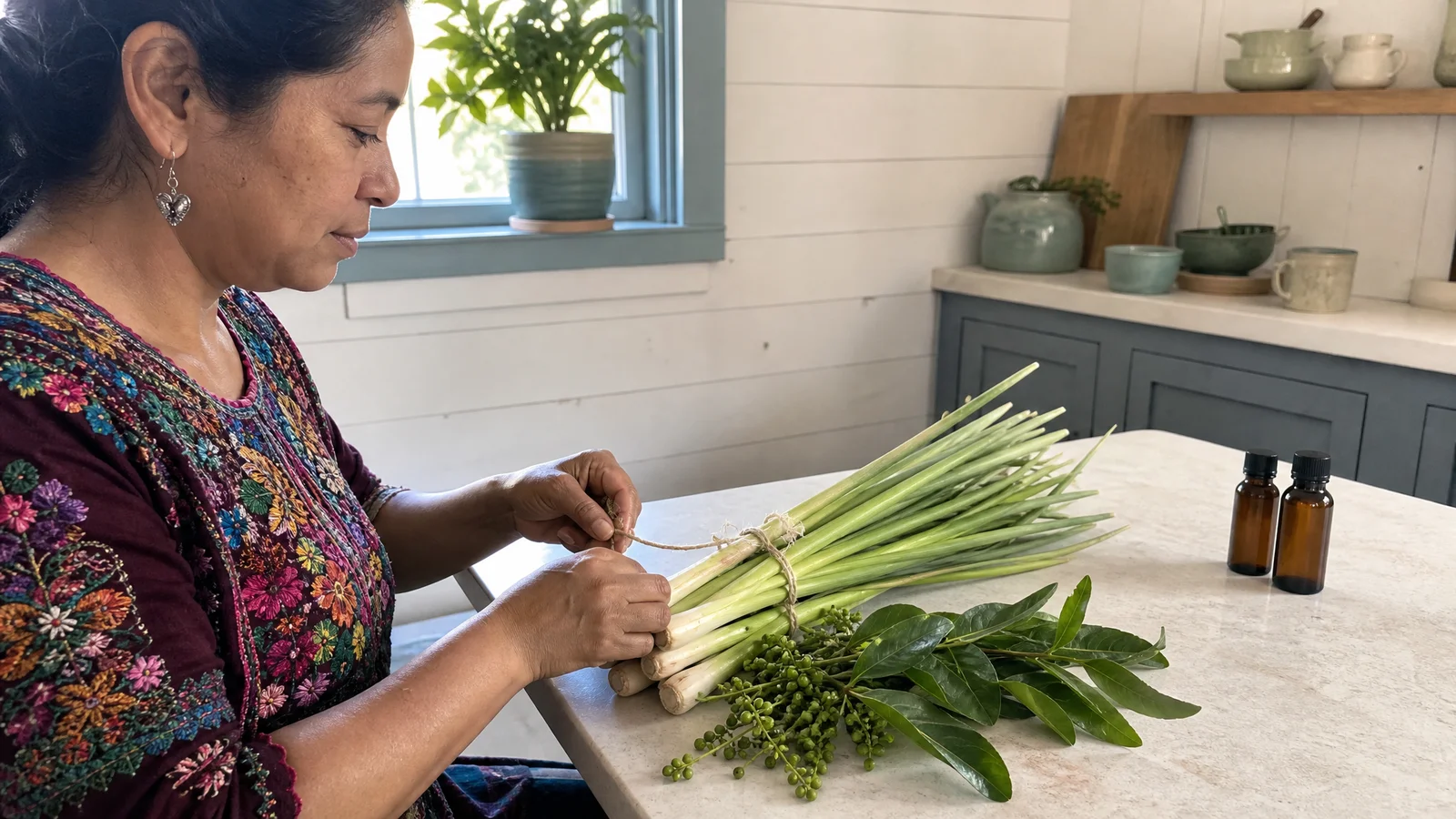
Say "lemon" and "oil" to a soap maker or candle maker and two bottles come to mind that are not lemon at all: litsea cubeba, from the fruit of a mountain tree, and lemongrass, from the leaves of a tall grass. Both are called citral oils, and both do smell bright and lemony. They are not the same oil, though, and knowing where they part ways makes it much easier to pick the right one for what you are making.
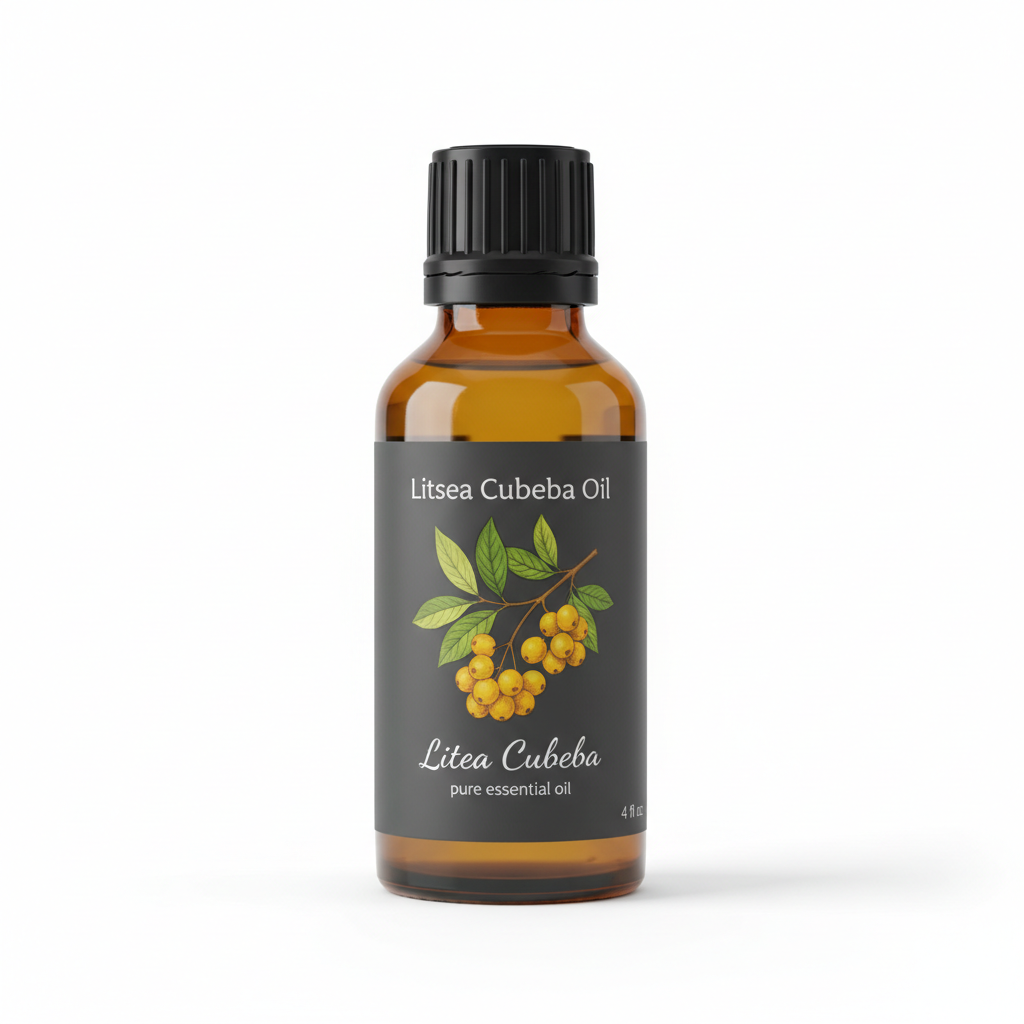
Litsea Cubeba Essential Oil
Our own Litsea Cubeba Essential Oil, in sizes from 0.5 oz to bulk.
From $12.99
Shop Now →What "citral twins" really means
Citral is the shorthand for two closely related molecules, neral and geranial. Litsea cubeba fruit oil and lemongrass leaf oil are both built mostly from that pair, which is why the two so often get swapped in recipes. The numbers in the literature show how close the match can be. Hydrodistilled litsea fruit from eight sites in China carried 78.7% to 87.4% neral plus geranial (Si et al., 2012), while six commercial steam-distilled batches assessed by EFSA averaged about 66% (geranial 36.35% plus neral 29.77%, our addition). A lemongrass oil analysed in an Egyptian study sat in the middle at about 70% (geranial 36.08%, neral 34.22%, again our addition) (Aly et al., 2025).
So "litsea has more citral" is not a rule you can lean on. Depending on which samples you compare, litsea is higher or lower. What separates the two is the company the citral keeps.
The supporting cast
In that lemongrass sample, myrcene made up 13.84% and geraniol 5.65%. In the litsea analyses, myrcene does not show up among the main components, and instead you find limonene (0.7% to 5.3% in the laboratory distillates, around 13% in the commercial batches) along with small amounts of linalool, geraniol and citronellal. In plain English, the lemon note is shared, and the background is different. That is the reason a recipe written for one oil never reads quite the same when the other is dropped in.
It is also why we describe our litsea the way we do. Our oil has an intense, sweet, lemon-drop brightness with a soft fruity, floral roundness, and we sell it as a top note. We sell litsea only, so we leave the lemongrass side of the comparison to the literature rather than to our nose.
One rule, different oils
Both oils fall under the same fragrance-industry rule, the IFRA Standard for Citral, which caps citral itself in the finished product by product category: 0.15% for body lotions and creams (Category 5A), 0.60% for fine fragrance (Category 4), 1.2% for soap and hard-surface cleaners (Categories 9 and 10A), and no restriction for candles (Category 12). The cap follows the molecule, not the plant, so what you can add of either oil depends on that batch's citral share.
A quick worked example. At 87.4% citral, the Category 5A cap works out to about 0.17% oil in a lotion; at 66% it is about 0.23%. Our dilution guidance for skin is 0.5% to 2% in a carrier oil with a patch test, which is roughly two to twelve times that figure, so we start at the low end and treat 2% as a limit for you to judge, not a safe number. The same arithmetic applies to lemongrass. Swapping one oil for the other will not change that conversation. Our IFRA article walks through the other categories.
Choosing for the job
- Candles, melts and other Category 12 uses: no citral cap applies, so this is a scent decision. If you are working from a lemongrass recipe, convert by weight, not by drops, as we describe in our substitutes guide.
- Soap and cleaners: the caps are more generous (1.2% citral), so the oil share can reach a little over 1%. Scent, not rules, is usually what sets the dose here.
- Leave-on skin products: citral oils belong at small fractions of a percent whichever you choose, with a patch test first.
- A recipe that calls for lemongrass by name: go and buy lemongrass. A different oil changes the background of the scent, and we would rather you get the result the recipe intended.
For a wider look at the whole family, our citral comparison lines several oils up together, and our citral article explains the molecule behind all of it.
Two bright lemon oils, one shared molecule, two different personalities. If you love the sweet, fruity edge on a lemon scent, litsea is a lovely place to start.
Litsea Cubeba Essential Oil
Litsea Cubeba Essential Oil from our own shop, in sizes from 0.5 oz to bulk.
From $12.99
Shop Now →Sources & Further Reading
- Si L et al., 2012. Chemical composition of essential oils of Litsea cubeba harvested from its distribution areas in China. Molecules 17(6):7057. pmc.ncbi.nlm.nih.gov/PMC6268156
- EFSA FEEDAP Panel, 2021. Safety and efficacy of a feed additive consisting of an essential oil from the fruits of Litsea cubeba (Lour.) Pers. (litsea berry oil) for use in all animal species (FEFANA asbl). EFSA Journal 19(6):e06623. pmc.ncbi.nlm.nih.gov/PMC8193530
- Aly et al., 2025. Chemical composition and biological activity of lemongrass volatile oil and n-Hexane extract: GC/MS analysis, in vitro and molecular modelling studies. PLoS One 20(2):e0319147. pmc.ncbi.nlm.nih.gov/PMC11856542
- IFRA, 2020. IFRA Standard: Citral (Amendment 49). ifrafragrance.org/standards/IFRA_STD_021.pdf