Litsea Cubeba and Melissa Oil: Why One Cannot Stand In
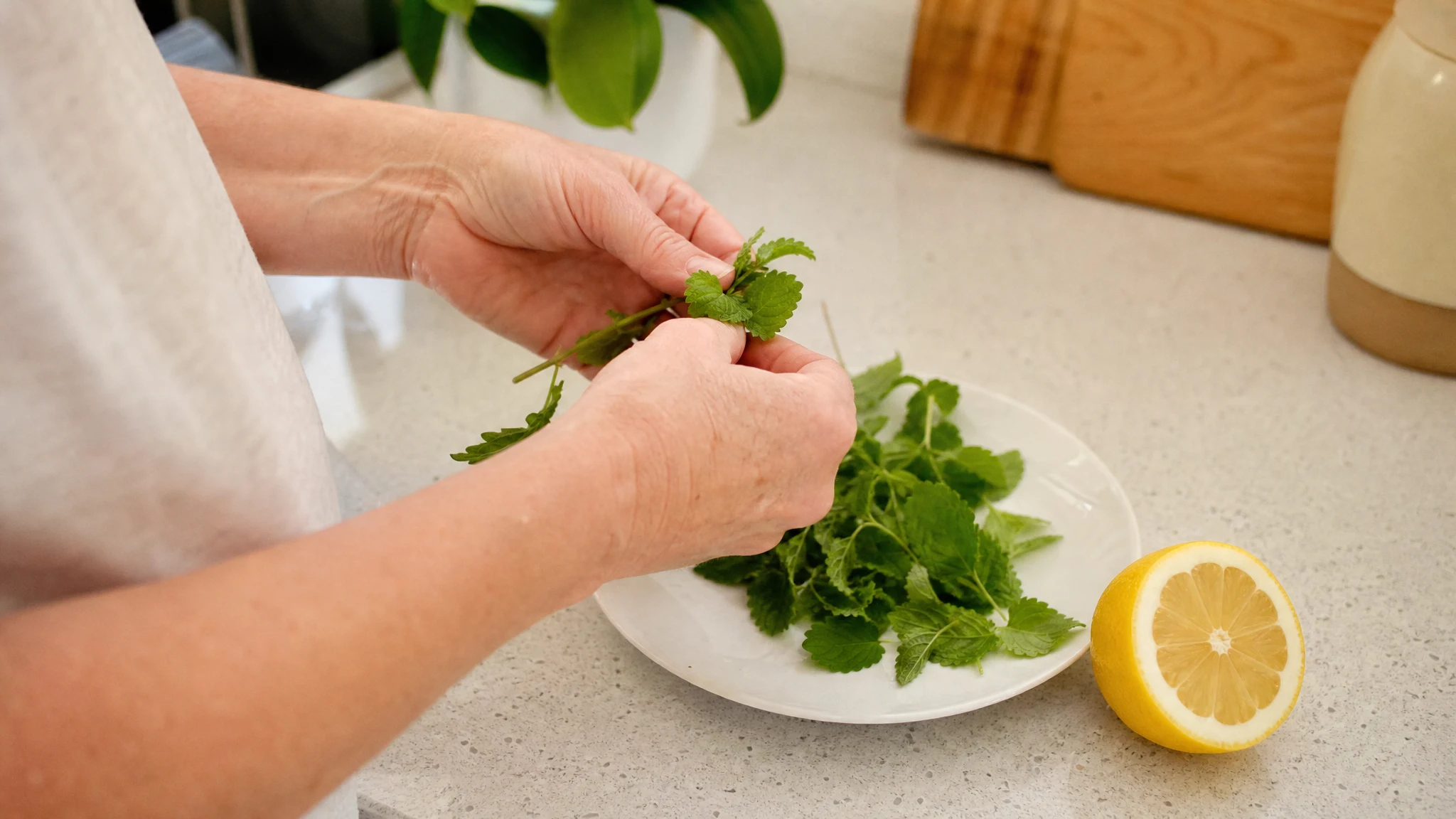
A bottle labelled melissa, or lemon balm, oil can smell wonderfully like a lemon, and so can litsea cubeba. That shared lemon note is exactly why the two get mentioned in the same breath, and why we want to be clear from the start: litsea is its own oil, with its own name on the label, not a stand-in for melissa.

Litsea Cubeba Essential Oil
Our own Litsea Cubeba Essential Oil, in sizes from 0.5 oz to bulk.
From $12.99
Shop Now →Why they get compared
Both can be dominated by neral and geranial, the two molecules that together are called citral. Litsea cubeba fruit oil is reliably heavy in them. A 2012 survey of fruit from eight sites in six Chinese provinces found 78.7% to 87.4% citral in the hydrodistilled oils (Si et al., 2012).
Melissa is far less predictable. A 2022 review of the literature (Petrisor et al., 2022) lists oils from different countries side by side, and the spread is striking. Adding geranial and neral from its per-study figures (our arithmetic):
| Melissa oil in the review | Citral (geranial plus neral) |
|---|---|
| Poland (two years) | 78.0% and 78.9% |
| Algeria | 74.4% |
| Germany | 67.0% |
| France | 11.4% |
| Tunisia and Greece | citral absent or not reported |
The review also notes a study of 28 accessions that found two chemotypes, a citral type and a germacrene D type. Put simply, "melissa" is a plant that comes in more than one chemical personality.
What the numbers tell you
Two practical lessons come out of that table. First, a Polish melissa oil at about 78% and the lowest litsea sample in the Chinese survey (78.7%) are the same number on citral alone. A high citral figure therefore proves nothing about which plant an oil came from. Second, because melissa can run well below litsea, "more citral means more authentic" is wrong in both directions.
That matters because when two oils share a lemon note, telling them apart takes real chemistry. A 2006 paper in Analytical and Bioanalytical Chemistry studied citronellal- and citral-containing oils, litsea cubeba and lemon balm among them, using chiral gas chromatography and stable-isotope analysis, and discussed how those methods can help detect adulteration (Nhu-Trang et al., 2006). The takeaway, which we draw from the abstract, is that a nose, a density reading or a single citral percentage will not settle the question.
What changes if you swap them
Citral is only part of any oil. The review mentions non-citral components in some melissa oils, such as caryophyllene oxide, which the review gives at up to 43.55% in one study, while litsea in the Chinese survey is dominated by oxygenated monoterpenes. Reasoning from those two profiles, swapping one for the other changes the half of the scent that is not lemon, and it changes the botanical name that belongs on the label. Our litsea has an intense, sweet, lemon-bright aroma with a soft fruity, floral roundness, and we would rather you enjoy it for that than ask it to be something else.
How we would approach it
If a recipe asks for melissa, we suggest buying melissa from a supplier who will give you a chromatogram in writing, naming the plant part and the lot, before you pay. If you simply want a bright citral-led lemon note, litsea is a lovely choice in its own right, and our substitutes guide shows how to convert a recipe by weight.
For our own oil, the Certificate of Analysis we publish covers one batch and lists appearance, smell, a relative density of 0.883, a refractive index of 1.483 and an optical rotation of +10.04 degrees. Those physical constants are useful, but a chromatogram is what separates one lemony oil from another, and if you need one, ask us in writing through the contact page before you order. Our GC-MS guide shows how to read one, the lemongrass comparison covers the other well-known lookalike, and the citral comparison sets more oils side by side. As with every citral oil, keep it well down in a carrier and patch test before skin use.
Melissa and litsea may share a lemon note, but each deserves to be bought, labelled and enjoyed as itself.
Litsea Cubeba Essential Oil
Litsea Cubeba Essential Oil from our own shop, in sizes from 0.5 oz to bulk.
From $12.99
Shop Now →Sources & Further Reading
- Si L et al., 2012. Chemical composition of essential oils of Litsea cubeba harvested from its distribution areas in China. Molecules 17(6):7057. pmc.ncbi.nlm.nih.gov/PMC6268156
- Petrisor G et al., 2022. Melissa officinalis: Composition, Pharmacological Effects and Derived Release Systems-A Review. Int J Mol Sci 23(7):3591. pmc.ncbi.nlm.nih.gov/PMC8998931
- Nhu-Trang TT et al., 2006. Authenticity control of essential oils containing citronellal and citral by chiral and stable-isotope gas-chromatographic analysis. Anal Bioanal Chem. pubmed.ncbi.nlm.nih.gov/17089103