Five Things People Get Wrong About May Chang Oil
Open a jar of litsea cubeba and the first thing you think is lemon. That is a fair reaction, and it is also where most of the confusion starts. Here are five ideas we hear repeated about May Chang oil, and what the sources let us say about each.

Litsea Cubeba Essential Oil
Our own Litsea Cubeba Essential Oil, in sizes from 0.5 oz to bulk.
From $12.99
Shop Now →It is a citrus oil
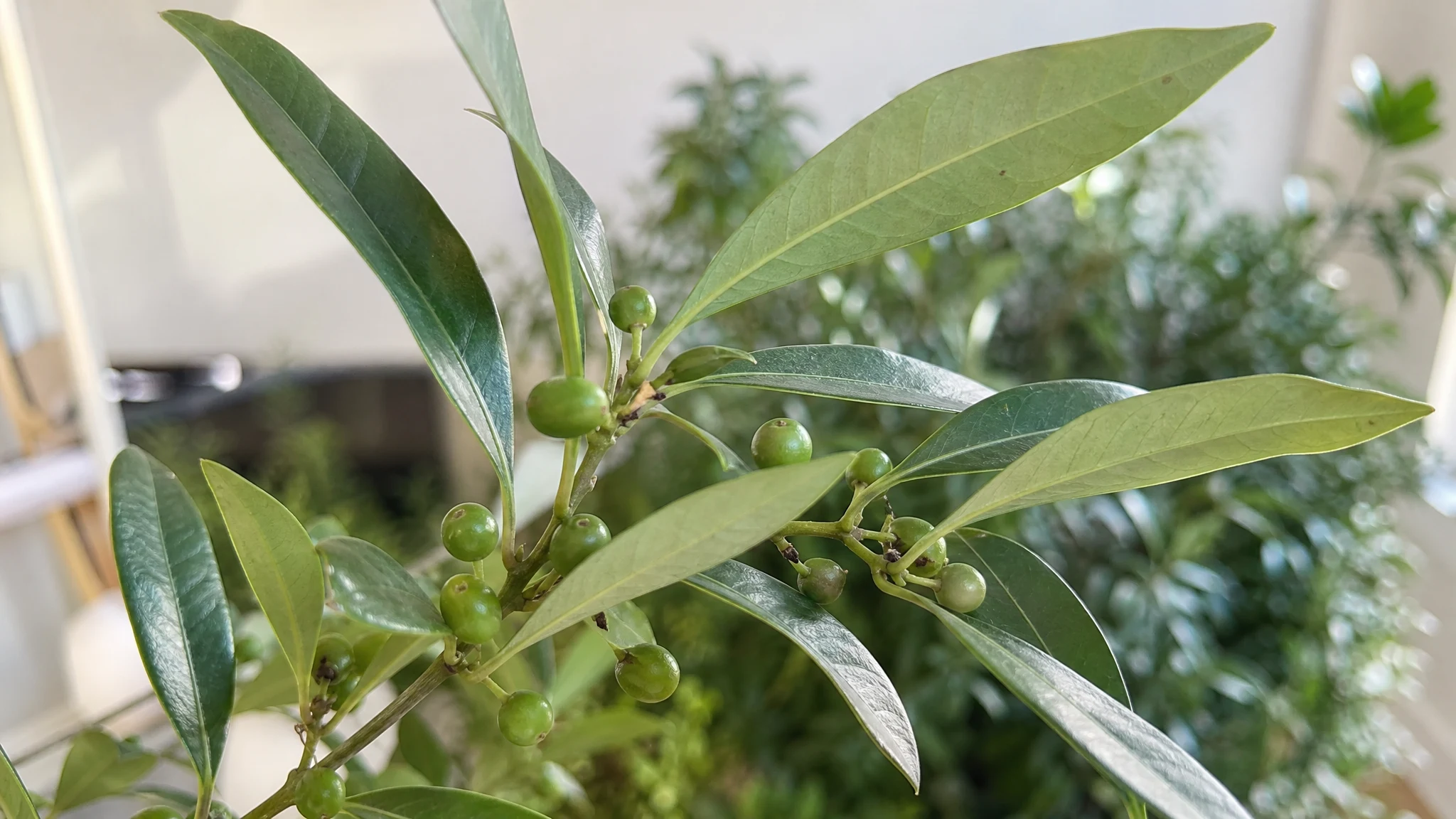
It smells like one and is not one. The plant is a small tree or shrub in the laurel family, also called May Chang or mountain pepper, and the oil is steam-distilled from its small fruits (Safety and efficacy of a feed additive consisting of an essential oil from the fruits of Litsea cubeba (Lour.) Pers. (litsea berry oil) for use in all animal species (FEFANA asbl) describes it just that way). Lemon oil comes from the peel of a citrus fruit, usually by cold pressing. The chemistry shows how different they are: one published cold-pressed lemon oil was about 70% limonene with only a few percent citral (Citrus limon (Lemon) Phenomenon-A Review of the Chemistry, Pharmacological Properties, Applications in the Modern Pharmaceutical, Food, and Cosmetics Industries, and Biotechnological Studies), while the litsea oils in Chemical composition of essential oils of Litsea cubeba harvested from its distribution areas in China were roughly 79% to 87% citral and only a little limonene. That is why we call ours lemon without the citrus. It is a different plant doing a similar trick, and our lemon comparison goes through it side by side.
It is the same as lemongrass or lemon verbena
They share citral, and that is where the likeness ends. Lemongrass is a grass leaf oil with its own supporting cast, and verbena oil from Lippia citriodora sits under its own fragrance standard. Swapping one oil for another in a formula is a rework, not a like-for-like change. Our articles on lemongrass and lemon verbena lay out the differences.
More citral means a better oil
It sounds sensible, and it is a poor way to shop. A citral percentage depends on who measured it and how. The eight laboratory-distilled samples in the Chinese study came in at about 79% to 87%. The six commercial batches in the EFSA opinion averaged around 66% (adding the average geranial and neral figures together), and the panel noted that its GC-MS method under-read geranial in two of them. Different samples, different methods, different numbers.
There is also a practical twist. Because the IFRA Standard: Citral, 2020 (Amendment 49) caps citral itself, a richer oil leaves less room in a leave-on product. In a body lotion at the 0.15% citral limit, an oil at 87% citral could make up about 0.17% of the lotion and an oil at 66% about 0.23% (our arithmetic). So we treat a citral figure as something you need for your sums, not a score out of ten. If your formula depends on one, ask us in writing through our contact page before you buy, because the Certificate of Analysis we publish for one batch lists density, refractive index and optical rotation and no GC-MS figure.
Natural means fine undiluted
Plant-derived does not mean gentle at full strength. EFSA's panel considered the oil an irritant to skin and eyes and a skin and respiratory sensitiser, and the citral it is rich in is what the fragrance rules focus on. Our dilution guidance for the skin is 0.5% to 2% in a carrier oil with a patch test first, and we start at the low end of that range. Here is why. Half a percent of oil carries roughly a third to four-tenths of a percent citral, already two to three times the body-lotion figure above, so we do not present 2% as a safe level for everyone. Treat the range as a ceiling for a small trial, keep it away from eyes, and stop at the first sign of irritation. Our skin basics article walks through it.
All litsea cubeba oil is the same
The name is used for more than one oil. The Chinese study notes that oils can be distilled from the fruit, root, flower, stem and leaf, each with a different make-up, and that is before you consider where and when the fruit was picked. A label that says only "litsea cubeba oil" leaves those questions open. We sell one litsea cubeba oil, steam-distilled from the fruit and sold neat, and the Certificate of Analysis we publish is for one batch (LICQGCLCCNC003A): a relative density of 0.883, a refractive index of 1.483 and an optical rotation of +10.04 degrees. Those sit inside the ranges for the international standard for litsea oil (ISO 3214:2000), which tells you the batch is in the expected physical range, not that it is a particular citral percentage.
If you remember one thing, make it this: the lovely lemon-drop scent is the easy part. Knowing what is in the bottle is where a little curiosity pays off, and the label and GC-MS reading guide is a good place to start.
Litsea Cubeba Essential Oil
Litsea Cubeba Essential Oil from our own shop, in sizes from 0.5 oz to bulk.
From $12.99
Shop Now →Sources & Further Reading
- Safety and efficacy of a feed additive consisting of an essential oil from the fruits of Litsea cubeba (Lour.) Pers. (litsea berry oil) for use in all animal species (FEFANA asbl)
- Chemical composition of essential oils of Litsea cubeba harvested from its distribution areas in China
- Citrus limon (Lemon) Phenomenon-A Review of the Chemistry, Pharmacological Properties, Applications in the Modern Pharmaceutical, Food, and Cosmetics Industries, and Biotechnological Studies
- IFRA Standard: Citral, 2020 (Amendment 49)