Does Litsea Cubeba Oil Stain Clothes? What to Do
Essential oils are oils, and a drop that lands on a cotton tee does what any oil does: it soaks in and leaves a darker, slightly translucent spot that does not dry away. Litsea cubeba is thin and runs quickly, so a small slip while you are filling a diffuser can mean a patch the size of a coin. The good news is that fresh oil on washable fabric is an ordinary grease stain, and ordinary grease stains have a well-worn routine.

Litsea Cubeba Essential Oil
Our own Litsea Cubeba Essential Oil, in sizes from 0.5 oz to bulk.
From $12.99
Shop Now →First minute: blot, do not rub
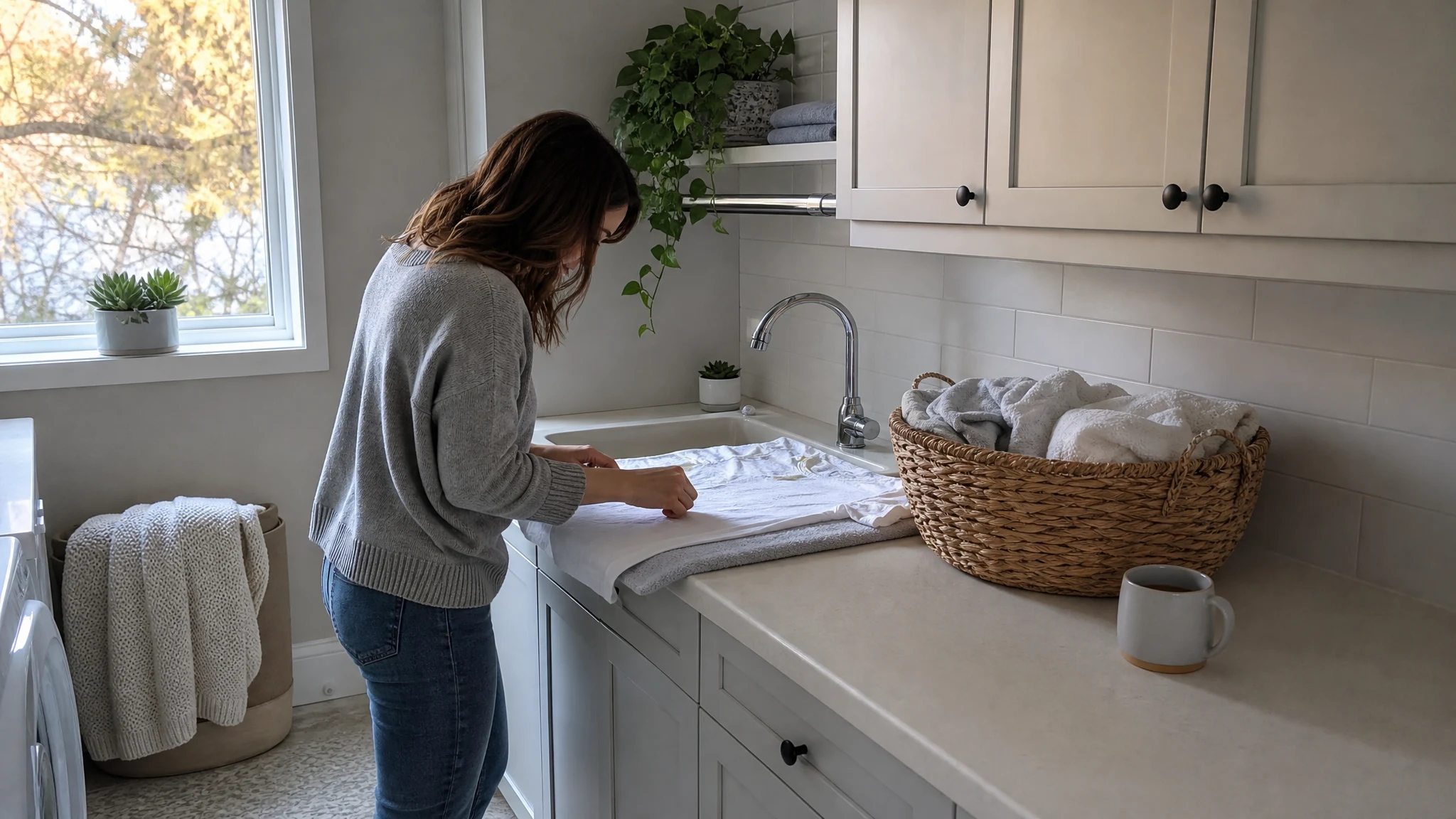
Lift off what you can with a clean paper towel or cloth, pressing straight down. Rubbing spreads the oil into a bigger patch and works it deeper into the weave. If you can reach the back of the fabric, slide an absorbent pad beneath the spot and blot from the wrong side, so the oil is pushed out into the pad. Move to a clean area of the pad as it soaks through. That is our reasoning, not a lab result: the oil needs somewhere to go before it sets.
Then break the oil up with dish detergent
Oil and water do not mix, so plain water will not shift it. Hand dishwashing liquid is made to lift grease, so work a small drop gently into the damp mark with your fingertip or a soft brush, leave it for a few minutes, then wash the garment as its care label allows. Before you commit, try the detergent on an inside seam or hem, which is the test New Mexico State University's extension guide recommends for any stain remover. Look at the spot when the garment comes out of the wash and before it goes anywhere near heat. The same guide warns not to press the fabric or put it in the dryer until the stain is gone, because heat can set a stain for good. If a faint shadow remains, repeat the detergent and wash again.
Does the colour matter?
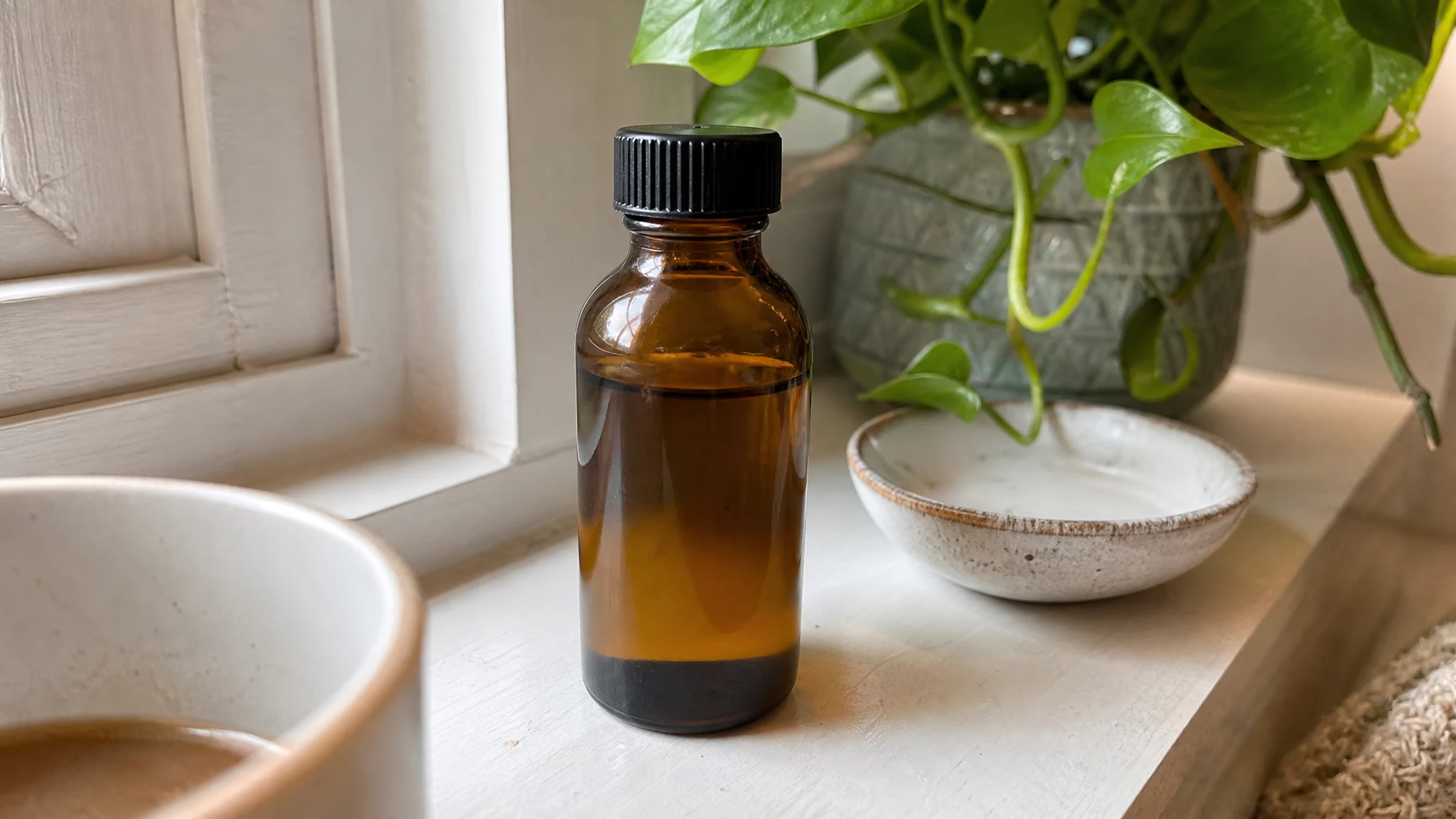
Our Certificate of Analysis describes the batch it covers as a light yellow liquid, so on pale fabric you are mainly dealing with the grease mark, not a dye. We cannot promise that any oil will leave nothing behind, and darker or more delicate fabrics are the ones to be careful with. On a white cotton tee the routine above is where we would start.
When to hand it to a professional
Silk, wool, leather, suede and anything marked dry clean only are not for the kitchen sink. The New Mexico State guide says for dry clean only fabrics to use only a dry-cleaning agent or ask a dry cleaner for help. Take the garment in quickly, point out the spot and tell them it is an essential oil. Act sooner rather than later, and if the mark has already been through the dryer, a dry cleaner is a sensible next call.
Hard surfaces and upholstery
On sealed counters or tiles, wipe up the oil with paper towel, then clean with warm water and a little dish detergent. On a wood finish, stone or a painted wall, wipe the oil off promptly and test any cleaner in a hidden corner first, since we cannot speak for every finish. For a sofa or rug, blot, use a small amount of detergent on a damp cloth, and check the cleaning code on the tag or ask the maker before using more than that.
Fewer spills in the first place
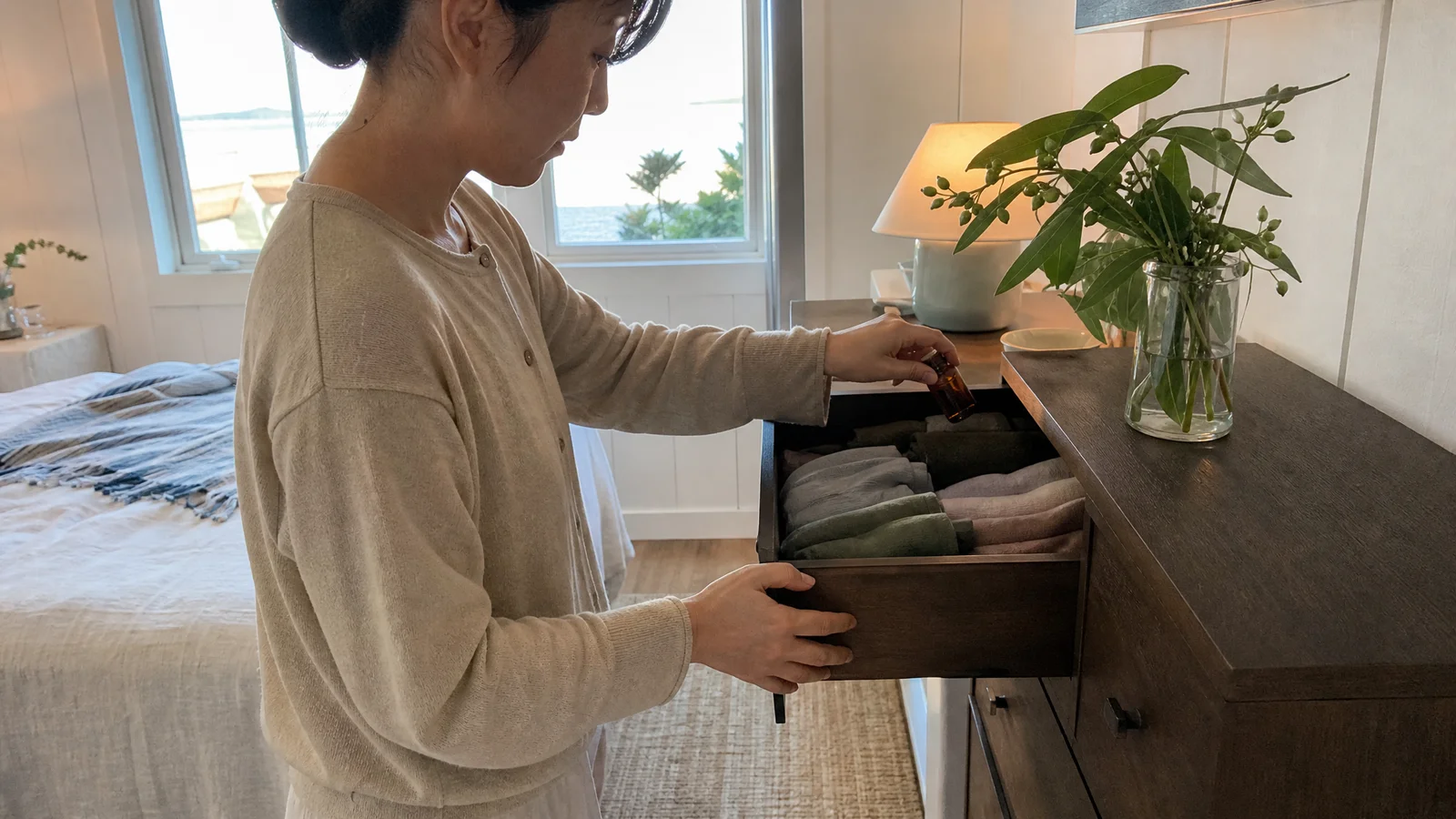
Most spills happen at the moment of pouring. Work over a tray or a folded towel, put the cap back on straight away, and add drops one at a time rather than tipping. If you scent linens, our linen scenting guide keeps the oil well diluted so it is not touching fabric neat, and if you diffuse, the diffuser guide covers how many drops to use. For skin, our oil is sold neat and should be diluted in a carrier first; the skin dilution article walks through the arithmetic. And if a spill lands on a pet or its bedding, the pets article explains who to call.
A spill is an annoyance, not a disaster. Blot, detergent, patience and a trip to the dry cleaner for the delicate things will see most garments through.
Litsea Cubeba Essential Oil
Litsea Cubeba Essential Oil from our own shop, in sizes from 0.5 oz to bulk.
From $12.99
Shop Now →Sources & Further Reading
- New Mexico State University Cooperative Extension, Removing Clothing Stains (Guide C-502)